Concrete and steel are two materials often combined to create robust, long-lasting structures. This partnership is fundamental in modern construction, as each material complements the other’s weaknesses. In this article, we will explore the effects of steel on concrete and how this combination enhances structural integrity and performance.
Why Combine Steel and Concrete?
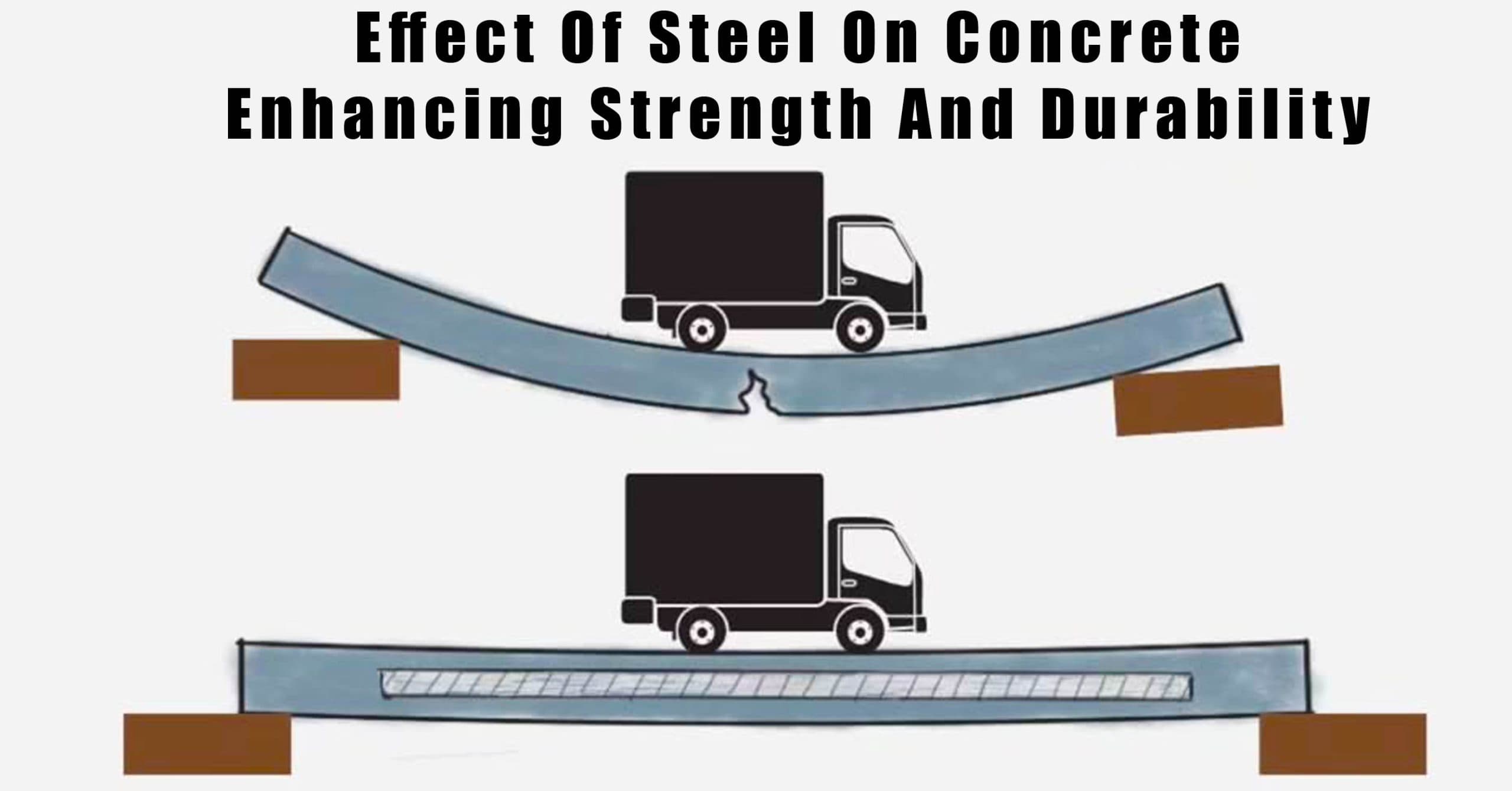
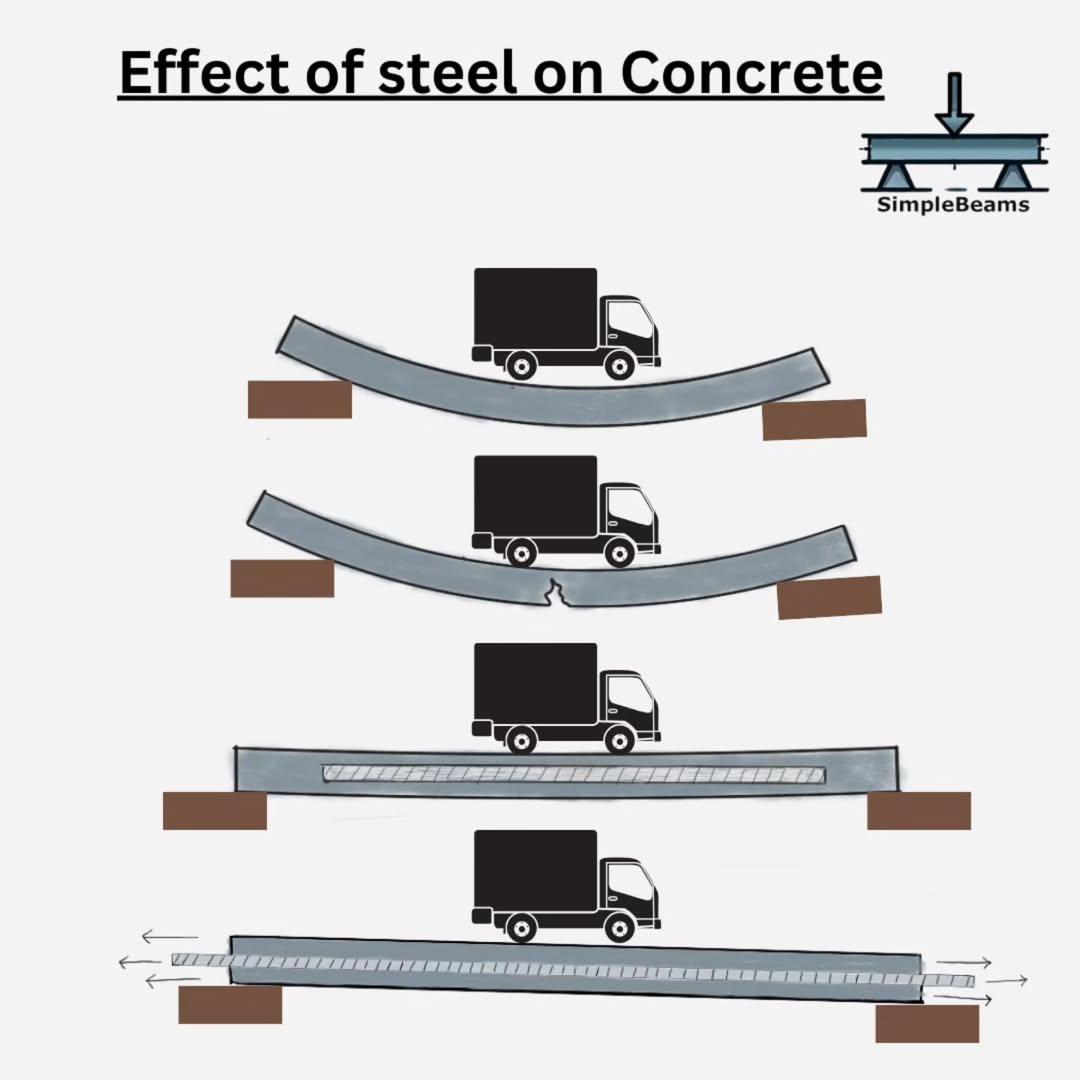
Concrete is known for its high compressive strength, meaning it can resist heavy vertical loads. However, it is weak in tensile strength, which refers to its ability to resist forces that pull it apart. This is where steel plays a critical role. Steel reinforcement, often in the form of rebar or steel mesh, provides the tensile strength that concrete lacks.
Key Effects of Steel on Concrete
1. Increased Tensile Strength
Concrete alone is prone to cracking when subjected to tensile forces. By embedding steel reinforcement, tensile stresses are transferred to the steel, which can stretch without breaking. This prevents cracks from spreading and ensures structural stability.
2. Enhanced Flexibility
Structures made solely of concrete can fail under excessive loads due to their brittleness. Adding steel makes the structure more flexible, allowing it to absorb and distribute forces more evenly. For example, bridges and beams reinforced with steel can handle dynamic loads, such as heavy vehicles, without collapsing.
3. Improved Durability
Steel reinforcement protects concrete from catastrophic failure by distributing stress across the structure. This not only extends the lifespan of the structure but also reduces maintenance costs. Additionally, properly treated steel resists corrosion, ensuring the durability of reinforced concrete in various environmental conditions.
4. Resistance to Shear Forces
Concrete structures often face shear forces, which occur when sections of a structure slide past one another. Steel reinforcement resists these forces, preventing structural failure in areas such as joints and beams.
5. Crack Prevention and Control
Steel reinforcement holds the cracked sections together when concrete cracks due to shrinkage, temperature changes, or loads. This prevents further damage and ensures the structure remains safe for use.
How Steel Works in Reinforced Concrete
Steel’s effectiveness in reinforced concrete comes from its properties:
Applications of Steel-Reinforced Concrete
Steel-reinforced concrete is used in a variety of structures, including:
Challenges of Steel in Concrete
Despite its benefits, steel reinforcement has some challenges:
Conclusion
The combination of steel and concrete is a cornerstone of modern construction. Steel enhances concrete’s tensile strength, flexibility, and durability, making reinforced concrete an ideal choice for various applications. While challenges like corrosion exist, advancements in materials and protective treatments continue to improve the performance of steel-reinforced concrete structures.
By understanding the effects of steel on concrete, engineers can design safer, more efficient, and longer-lasting structures. This synergy between the two materials showcases the brilliance of engineering and the importance of material science in building a resilient world.
Click Here To See AMAZING! What Will Happen If We Add Sugar To Concrete?
Loading related articles...
Loading recent articles...
Loading featured articles...
