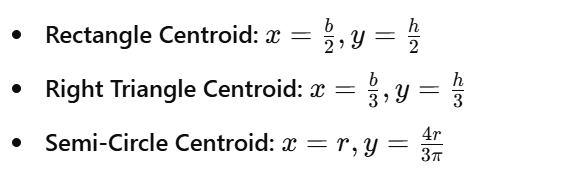
Structural engineering involves crucial principles and formulas that ensure the stability and strength of buildings and other structures. Understanding section properties, material properties, and structural analysis is essential for designing safe and efficient support systems. This guide explores key concepts, including centroid calculations, material behavior, and beam analysis formulas.
Section Properties: Understanding Centroids and Moment of Inertia
Moment of Inertia (I)
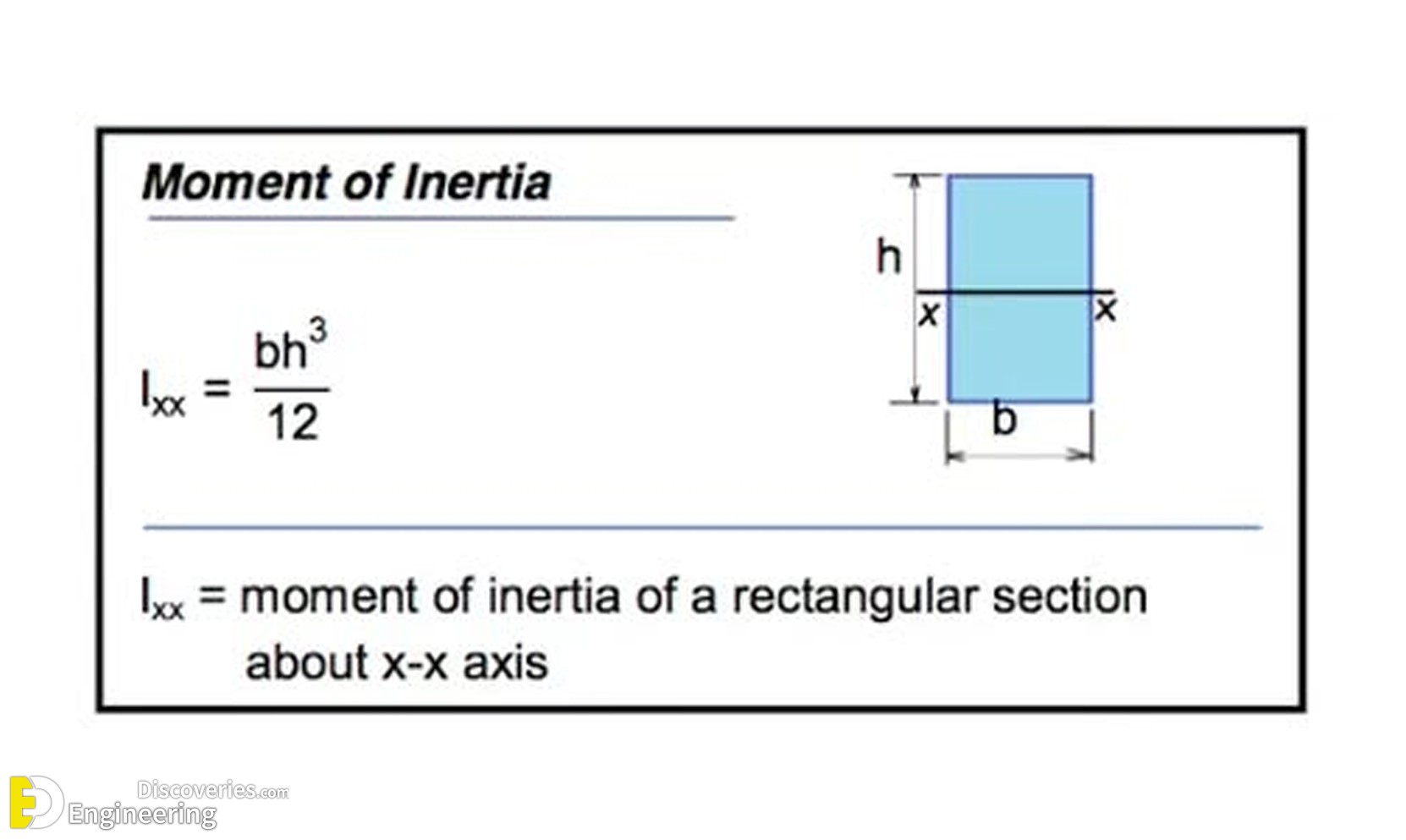
The moment of inertia measures an object’s resistance to bending or rotation about an axis. For a rectangular section, the formula is:
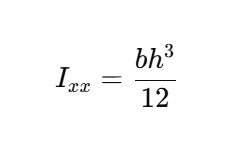
Where:
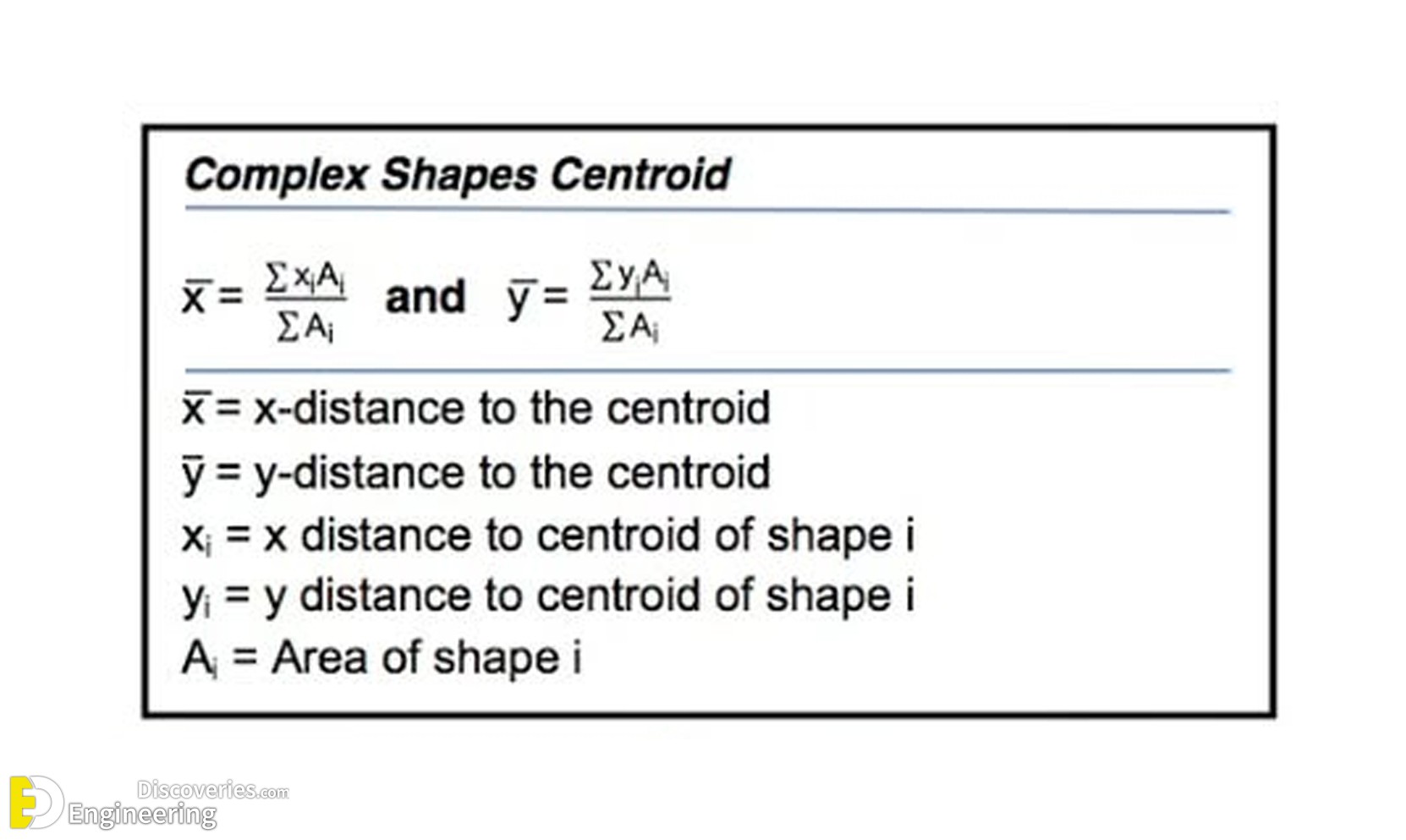
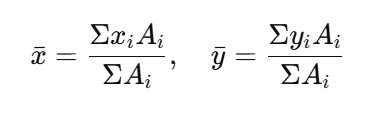
Centroid Calculations
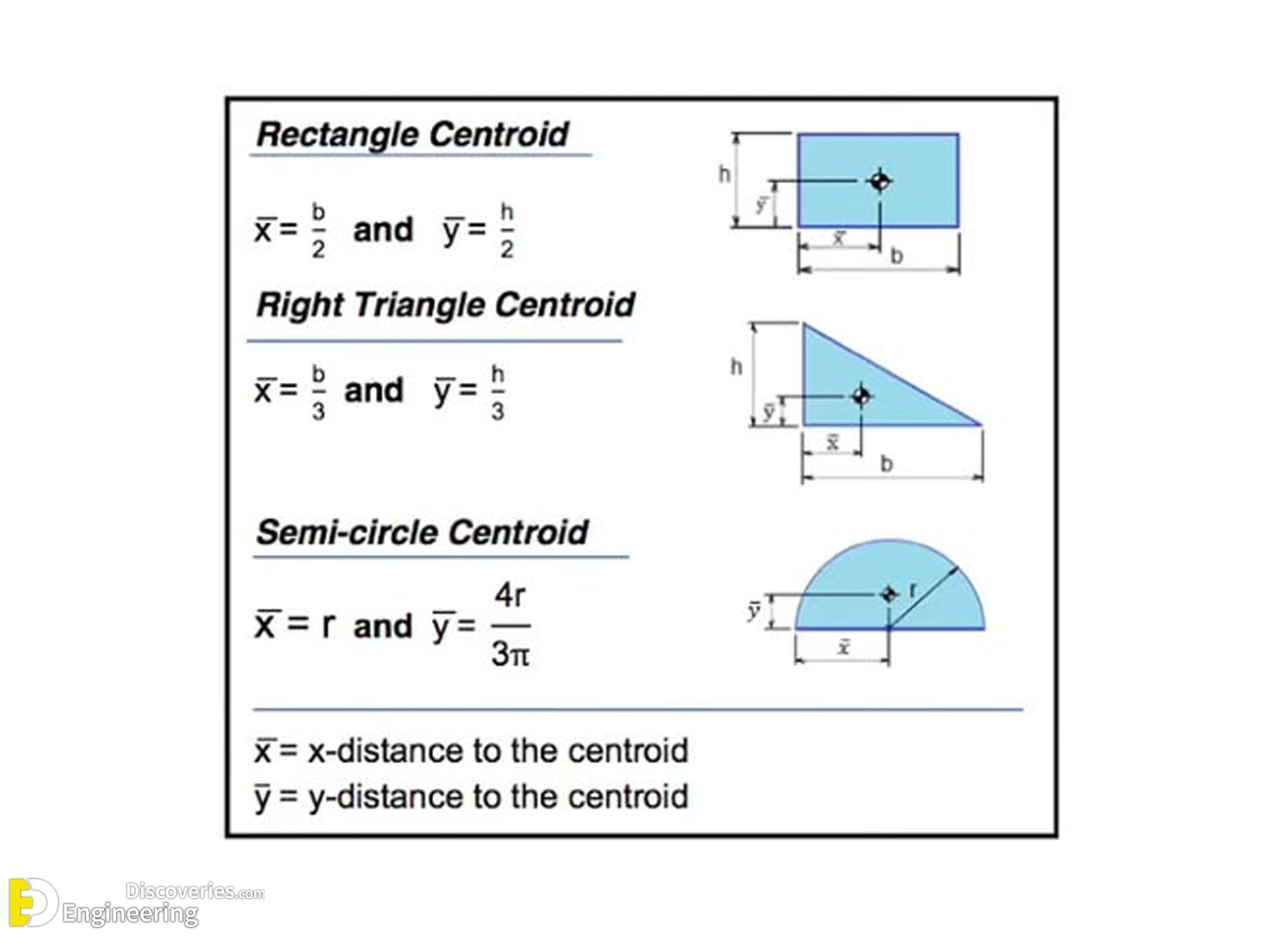
Centroid locations are crucial for calculating bending stresses and moments. The following are centroid formulas for common shapes:
Material Properties: Stress, Strain, and Modulus of Elasticity
Stress and Strain Relationships
Stress (σ) and strain (ϵ) are fundamental properties that describe how materials respond to forces:
Where:
ϵ = δ/L0
Where:
Modulus of Elasticity (E)
The modulus of elasticity defines a material’s ability to deform elastically under stress. It is calculated as:
E = σϵ/E
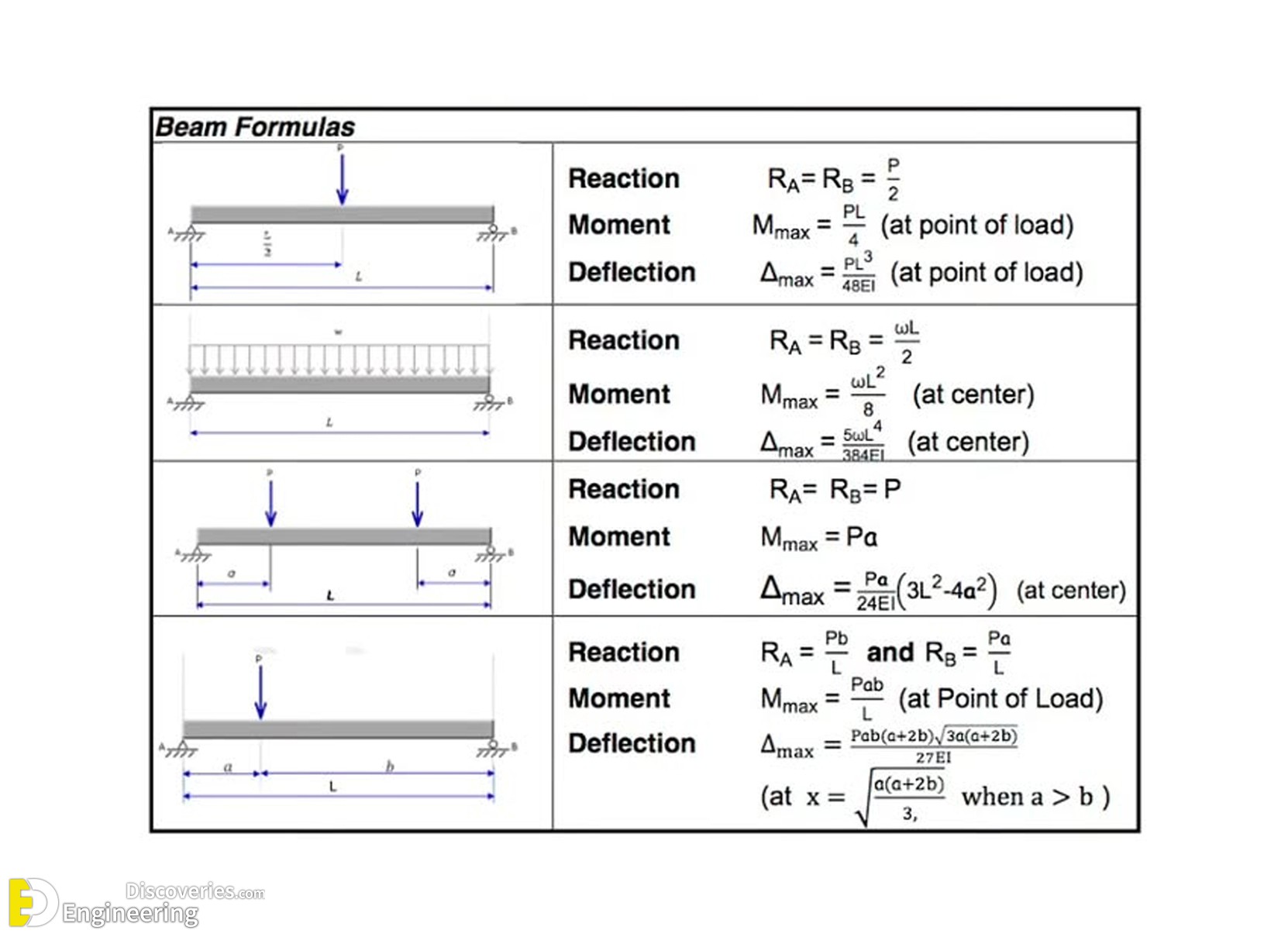
RA = RB = 2/P
Mmax = P/L4
Δmax = PL^3/48EI
RA = RB = wL/2
Axial deformation is calculated using the formula:
δ = FL0/AE
Where:
Truss Analysis Essentials
Truss systems are composed of interconnected members arranged in triangular units. For a stable truss, the equation must be satisfied:
2J = M + R
Where:
Click Here To See Understanding Structural Theory – Cheat Sheet Free Download
Loading related articles...
Loading recent articles...
Loading featured articles...