
The depth of foundation is one of the most crucial aspects of structural design. A properly calculated foundation depth ensures that the structure remains stable, safe, and durable under all loading conditions. In this comprehensive guide, we will cover how to calculate the depth of foundation using Rankine’s Formula, along with a detailed step-by-step calculation and practical considerations for civil engineering applications.
Understanding Foundation Depth
The foundation depth is the distance between the natural ground level and the bottom of the foundation. This depth must be sufficient to transfer all loads safely to the soil without causing shear failure, settlement, or instability.
Factors affecting depth include:
For precise calculation, engineers use Rankine’s Formula which accounts for soil properties and load-bearing capacity.
Rankine’s Formula for Depth of Foundation
The formula to determine the minimum depth of foundation is:
D = (qu / γ) × [(1 – sin Φ) / (1 + sin Φ)]²
Where:
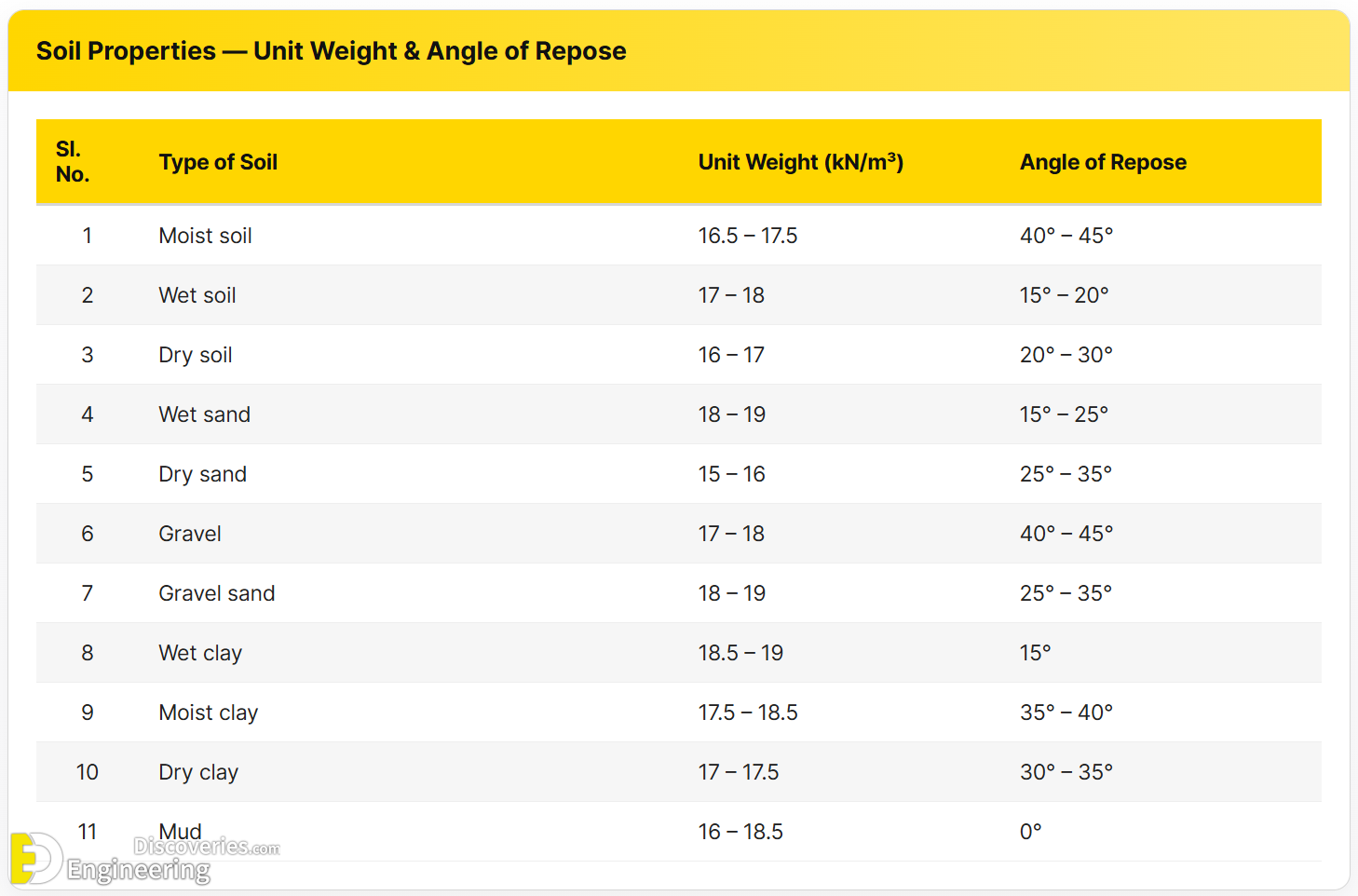
This formula ensures that the foundation is safe against shear failure and that the depth is enough to develop the required passive earth pressure to resist overturning.
Step-by-Step Calculation Using Given Data
Let us calculate the depth of foundation using the provided values:
Step 1: Substitute Values into Rankine’s Equation
D = (180 / 20) × [(1 – sin 30°) / (1 + sin 30°)]²
Step 2: Simplify the Equation
[(1 – 0.5) / (1 + 0.5)]²
= (0.5 / 1.5)²
= (0.3333)²
= 0.1111
D = 9 × 0.1111 = 1.0 m
Result
The minimum depth of foundation (D) = 1.0 meters
This means the foundation must be placed at least 1 meter below ground level to ensure stability and safety under the given soil conditions.
Practical Considerations in Foundation Depth Calculation
While the theoretical calculation gives us a precise depth, several real-world factors must also be considered:
1. Frost Depth
In colder regions, foundations must extend below the frost line to prevent frost heave, which can damage the structure.
2. Groundwater Table
High water tables can reduce the soil’s bearing capacity and increase settlement. Proper drainage or dewatering may be required before construction.
3. Soil Type and Variability
Different soil layers may exist at various depths. A geotechnical investigation is essential to determine safe bearing capacity at each level.
4. Loading Conditions
Heavier structures require deeper foundations to distribute loads safely. Column loads, wall loads, and live loads must all be considered.
5. Safety Factors
Engineers generally apply a factor of safety to ensure extra stability and account for uncertainties in soil parameters.
Types of Foundations Based on Depth
Depending on the depth and nature of soil, foundations can be categorized as:
Since our calculation yields a 1.0 m depth, this falls under the category of shallow foundations.
Importance of Correct Foundation Depth
Selecting the correct depth ensures:
Incorrect depth calculation can lead to cracks, tilting, or complete structural failure.
Click Here To See How To Accurately Determine The Weight Of An RCC Column
Loading related articles...
Loading recent articles...
Loading featured articles...
