
Introduction to Chair Bars in Footings
Chair bars play a crucial role in civil construction. They support the top and bottom reinforcement cages within footings. To ensure strength and alignment, the top head of the chair is tied to the bottom layer of the upper cage, and the bottom legs are anchored to the bottom layer of the lower cage.
Understanding how to calculate their cutting length is essential for accuracy, cost-effectiveness, and structural integrity.
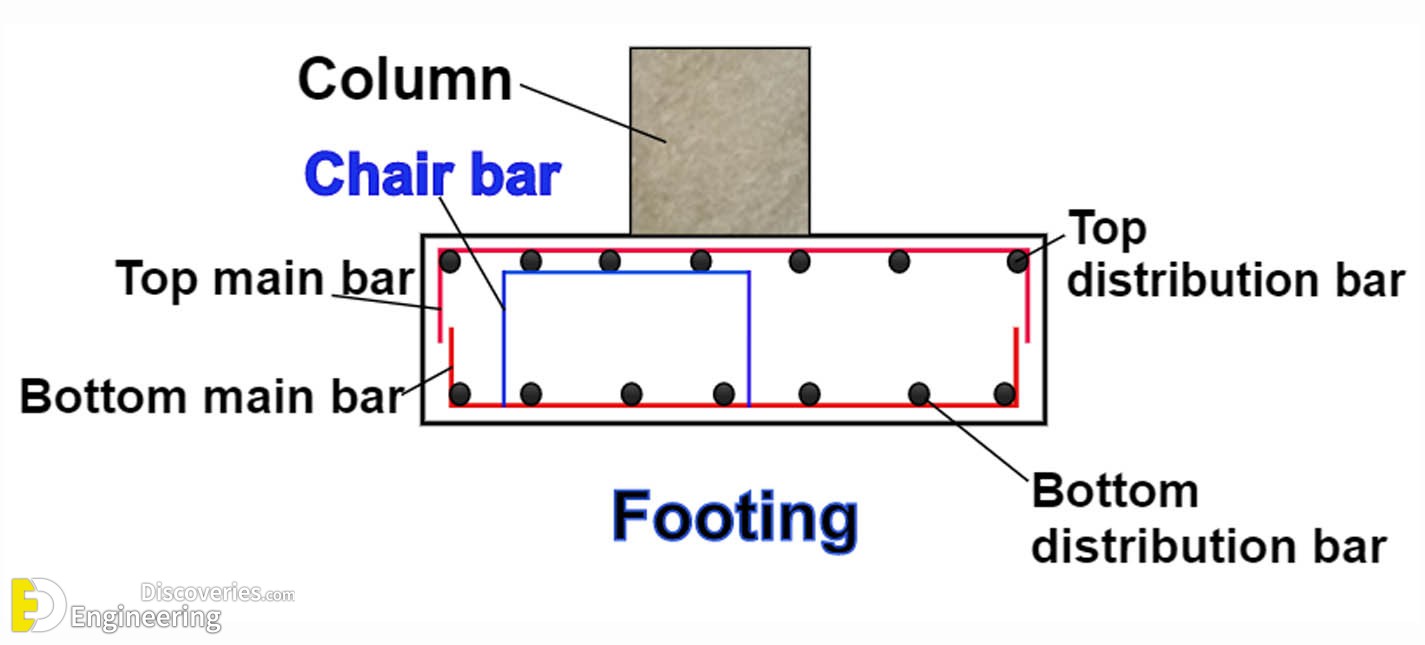
Understanding the Chair Bar Components
A chair bar typically has three main parts:
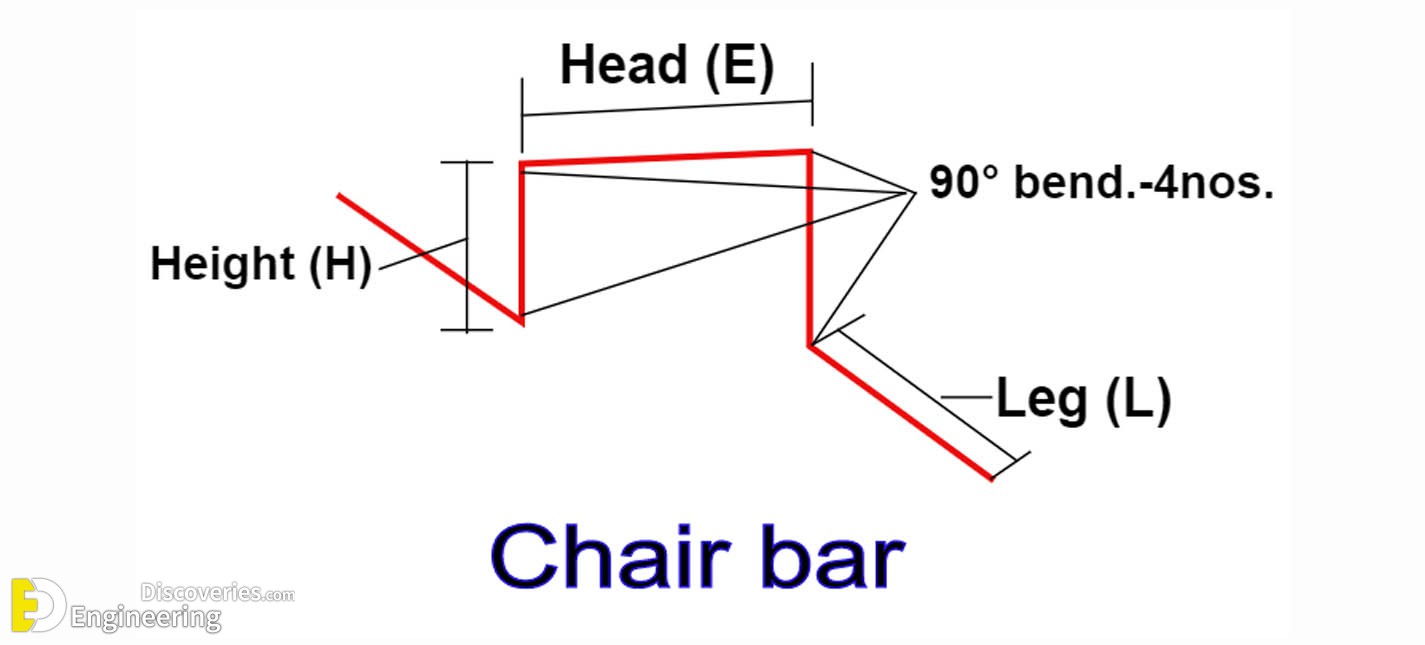
The general formula to calculate cutting length is:
Cutting Length = [2H + E + 2L – 8d]
Where:
Given Specifications for the Calculation
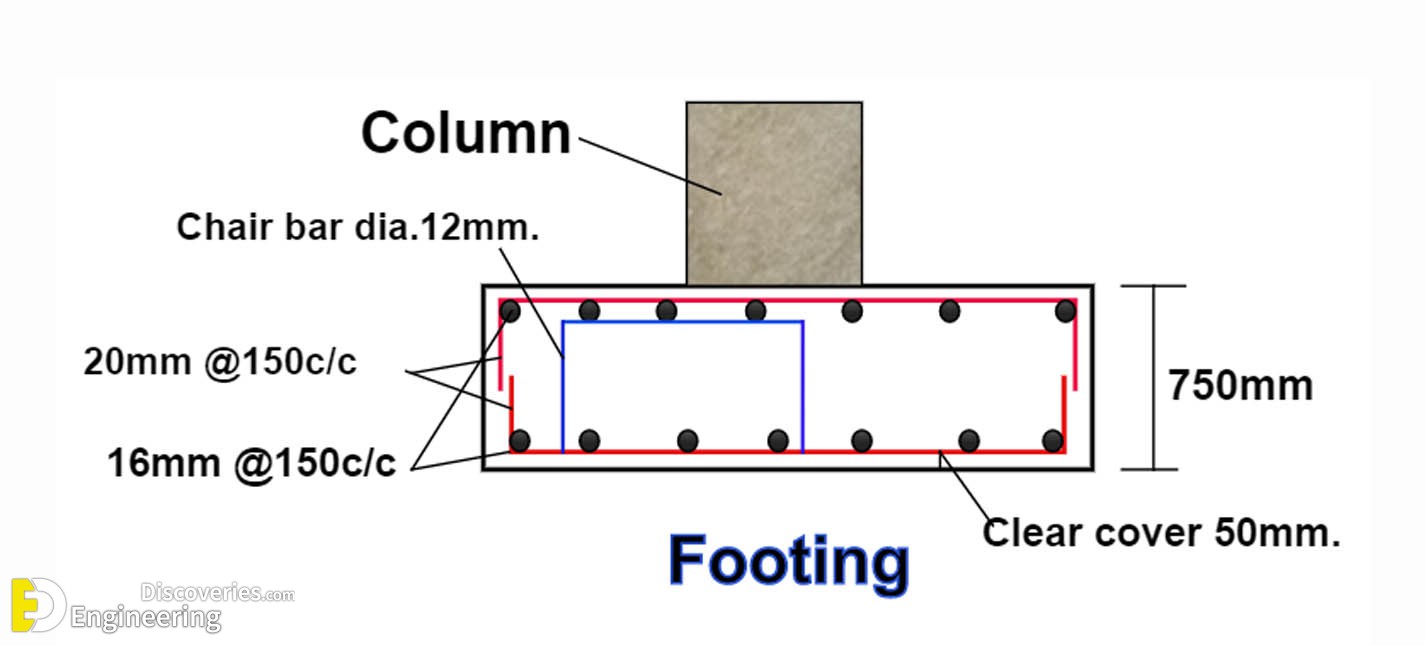
Step-by-Step Calculation
1. Head Length (E)
The head sits over the top distribution bars and requires extra anchorage.
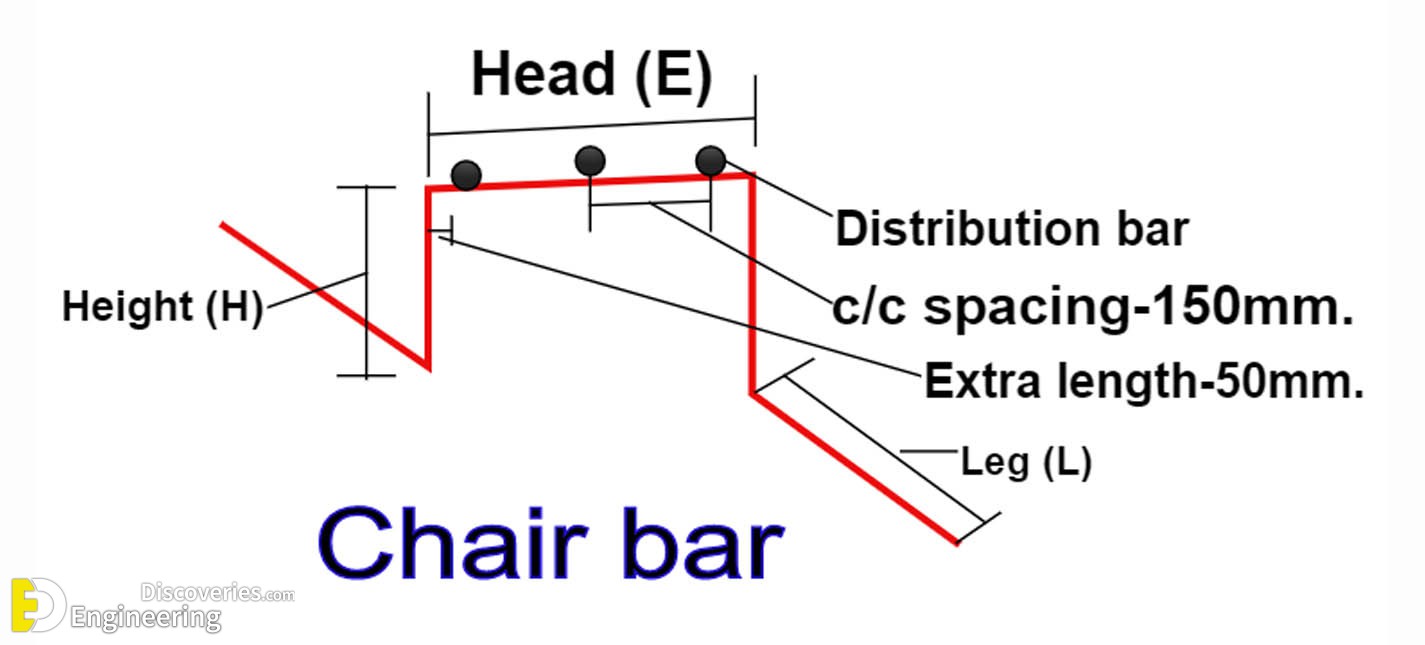
Head Length = (2 × spacing) + (2 × extra length)
= (2 × 150mm) + (2 × 50mm)
= 300mm + 100mm
= 400mm
2. Height (H)
Height is calculated by deducting covers and bar diameters from the footing depth.
Height = Footing Depth – [2 × clear cover + sum of bar diameters]
= 750mm – [2 × 50mm + 20mm + 16mm + 20mm]
= 750mm – [100mm + 56mm]
= 750mm – 156mm
= 594mm
3. Leg Length (L)
Each leg must cross at least two bars with added length on both sides.
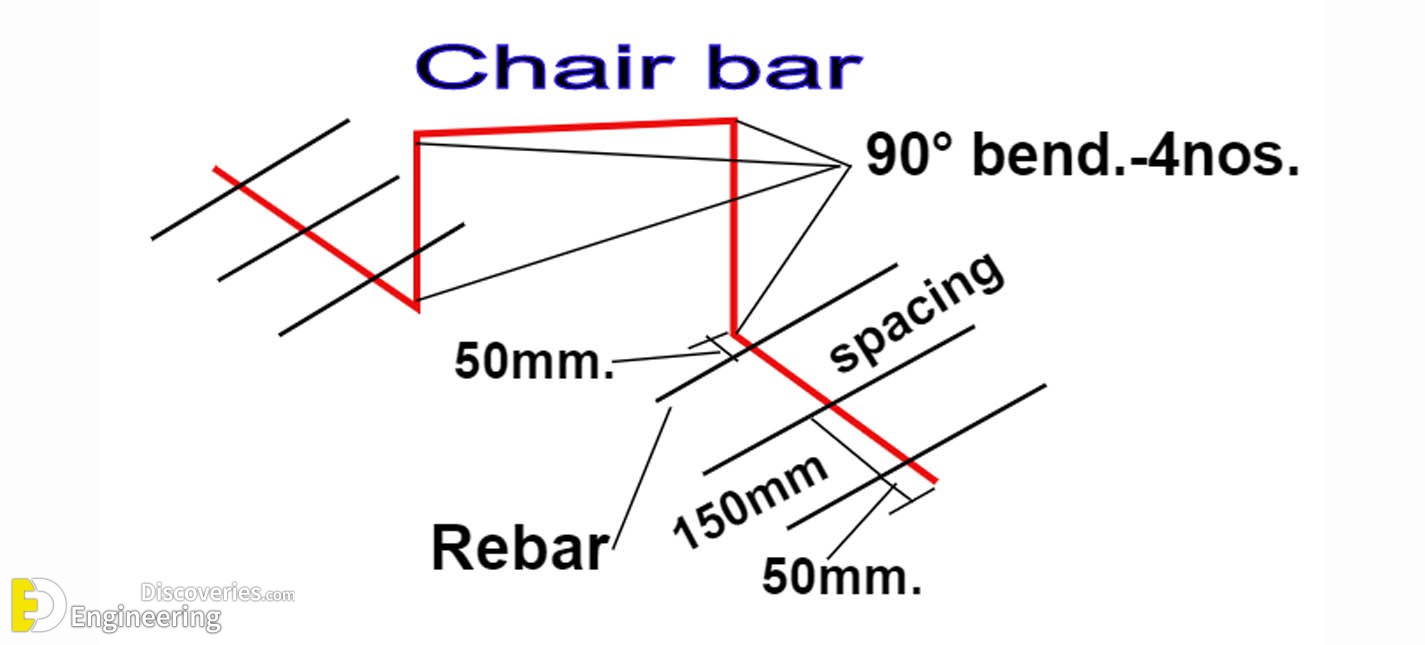
Leg Length = (2 × spacing) + (2 × extra length)
= (2 × 150mm) + (2 × 50mm)
= 300mm + 100mm
= 400mm
4. Calculating Total Cutting Length
Now, apply the values into the cutting length formula:
Cutting Length = [2H + E + 2L – 8d]
= [2 × 594mm + 400mm + 2 × 400mm – 8 × 12mm]
= [1188mm + 400mm + 800mm – 96mm]
= 2388mm – 96mm
= 2292mm
Key Notes for Practical Application
Click Here To See How To Calculate The Total Load Over The RCC Slab?
Loading related articles...
Loading recent articles...
Loading featured articles...
