
Calculating the self-weight of reinforced cement concrete (RCC) structures is crucial in structural engineering. The dead load directly impacts the stability and foundation design. Below is a step-by-step guide to determining the self-weight of RCC footings and plinth beams.
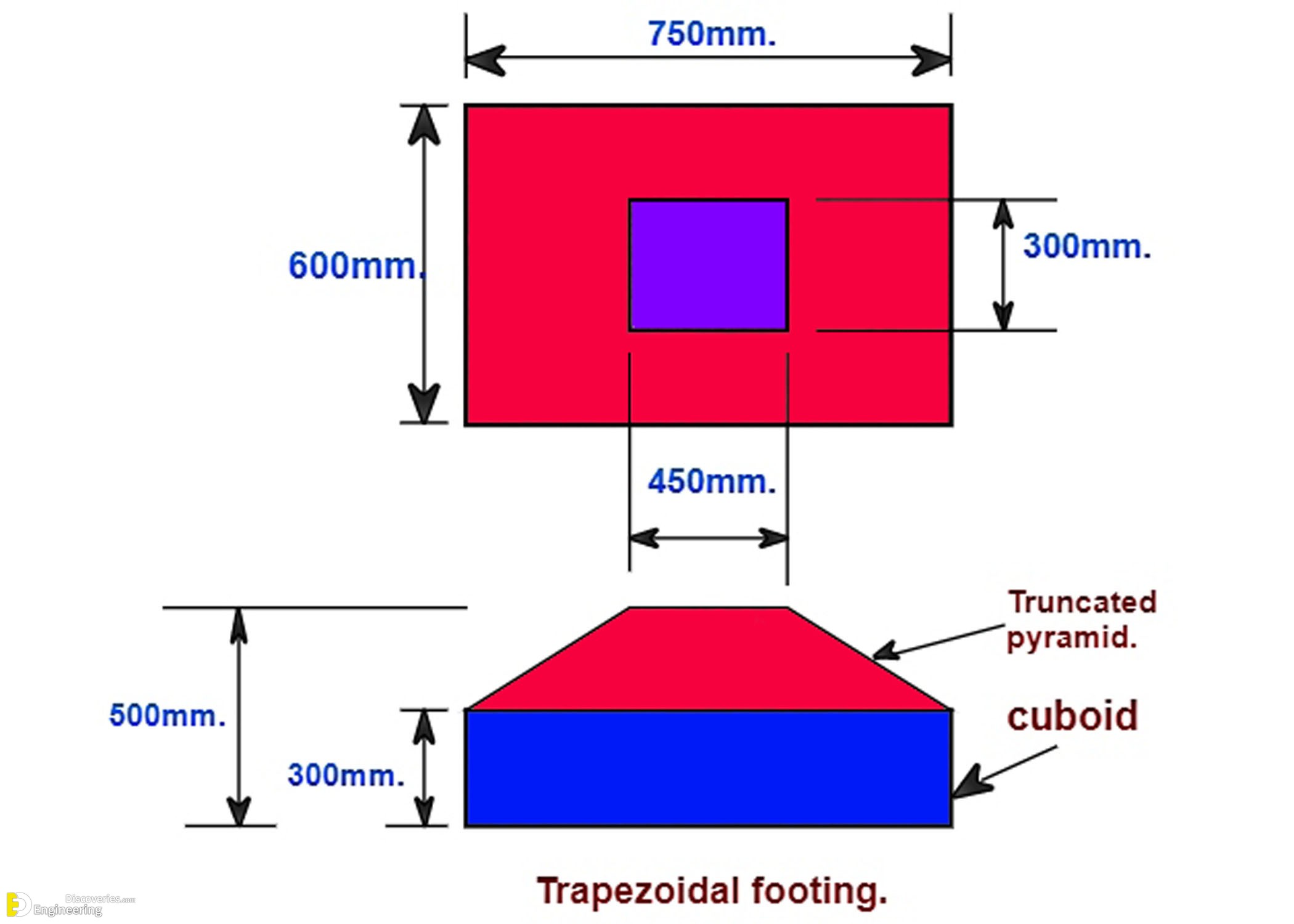
Given Data for RCC Footing:
Calculation:
To determine the self-weight of the RCC footing, we use the formula:
Self-Weight = Unit Weight × Volume
The volume of the RCC footing is calculated separately as:
The volume of the RCC footing is calculated in a separate article linked below.
Click Here To See How To Calculate the Volume Of Concrete In Trapezoidal Footing?
Volume = 0.1904 m³
Now, calculating the self-weight:
Self-Weight = 2500 kg/m³ × 0.1904 m³ = 476 kg
Thus, the RCC footing’s self-weight is 476 kg.
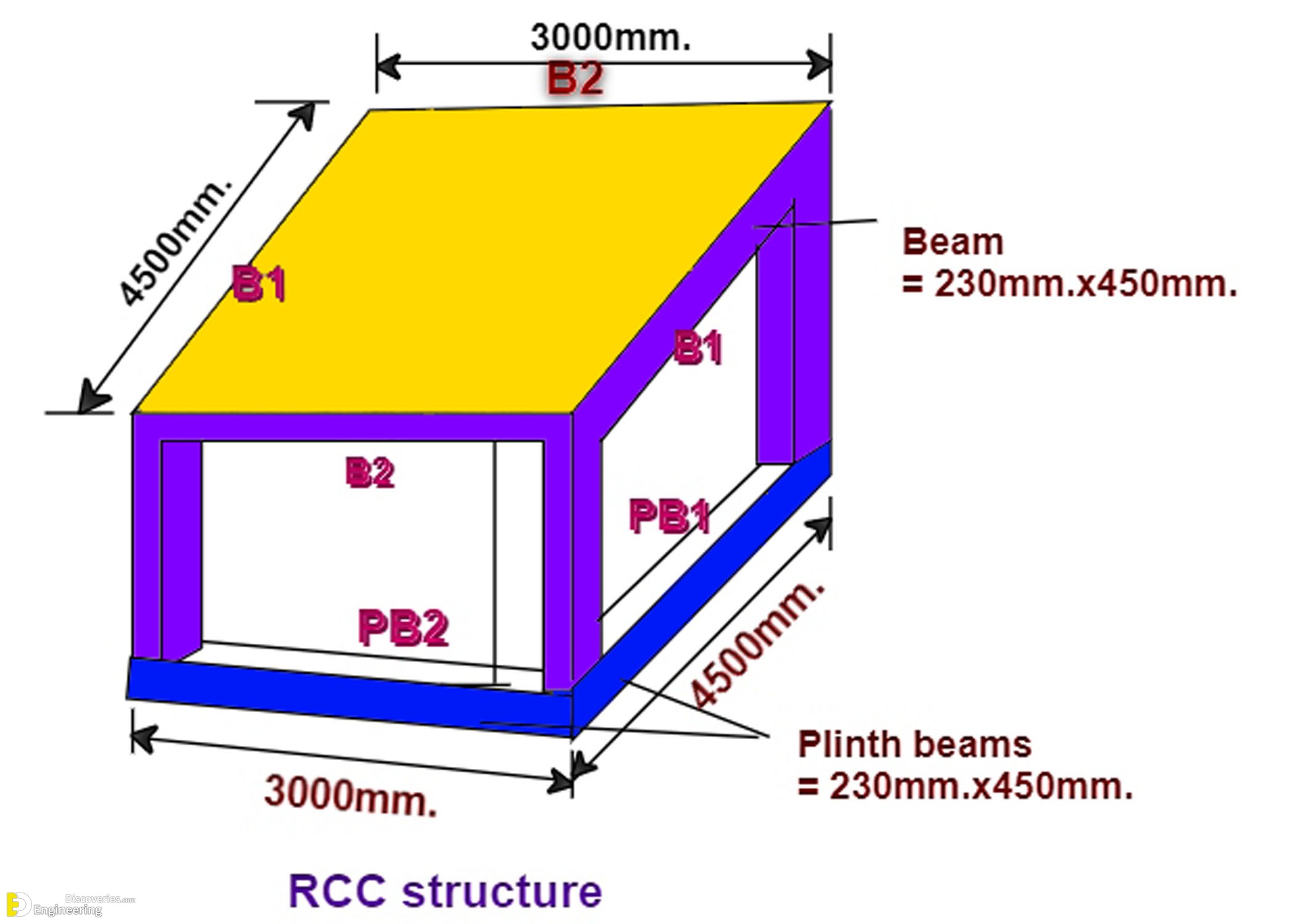
Given Data for Plinth Beams:
Plinth Beam 1 (PB1)
Plinth Beam 2 (PB2)
Calculation:
Self-Weight of PB2:
Using the formula:
Self-Weight = Unit Weight × Volume
= 2500 kg/m³ × (3.0 m × 0.23 m × 0.45 m)
= 776.25 kg
Self-Weight of PB1:
Self-Weight = 2500 kg/m³ × (4.5 m × 0.23 m × 0.45 m)
= 1164.38 kg
The calculated self-weights of RCC structural components are:
These values are critical for load distribution, ensuring stability, and preventing structural failures. Engineers must accurately calculate these values for precise structural design.
Click Here To See How To Calculate The Total Load Over The RCC Slab?
Loading related articles...
Loading recent articles...
Loading featured articles...
