
Introduction to Level Error Checking
In surveying, ensuring the accuracy of leveling equipment is essential. Performing level error checks on auto-level or leveling machines helps achieve precise results. Follow this simple step-by-step procedure to minimize potential discrepancies.
Step 1: Set Up the Level Machine
Begin by setting up your level machine correctly. Make sure it is well-leveled on firm ground. Stability is critical to avoid incorrect readings. Always double-check that the setup follows manufacturer guidelines.
Step 2: Position Staff at Equal Distances
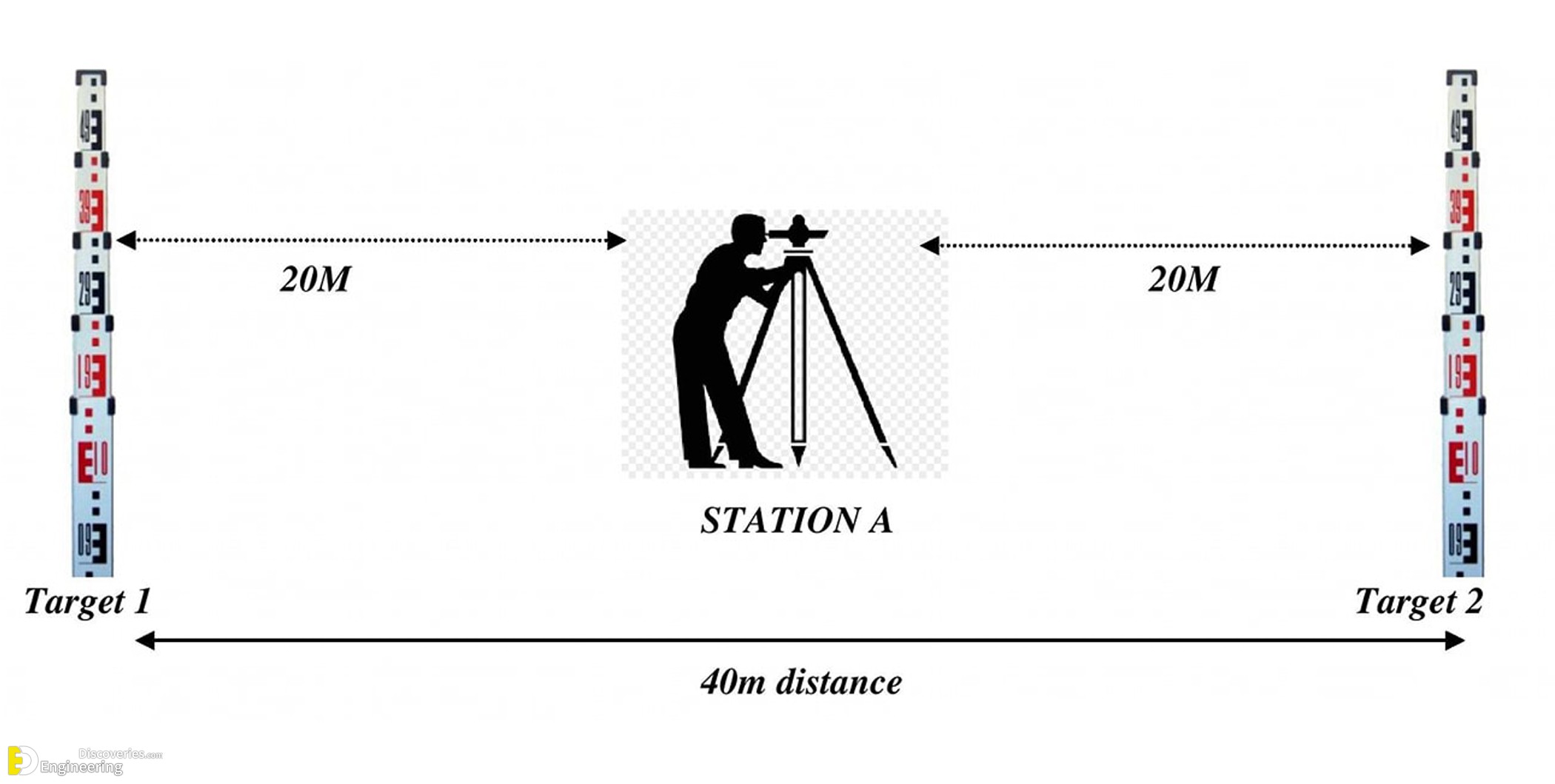
Next, place two staff members 20 meters away from the station on opposite sides. This symmetrical setup ensures balanced readings from both targets.
Step 3: Record Initial Staff Readings from Station A
With the equipment ready at Station A, take staff readings from both Target 1 and Target 2. Record these values carefully.
Example Reading at Station A
| STATION A | Target 1 | Target 2 | Difference (T1 – T2) |
|---|---|---|---|
| For example | 120.00 cm | 186.20 cm | -66.20 cm (120.00 – 186.20) |
Calculate the difference between Target 1 and Target 2 readings. This initial value will be essential for cross-checking accuracy later.
Step 4: Shift to Station B for Verification
Move the level machine to Station B, located approximately 5 meters from one target. Maintain the total distance of 40 meters between the two staff members.
Step 5: Record Staff Readings from Station B
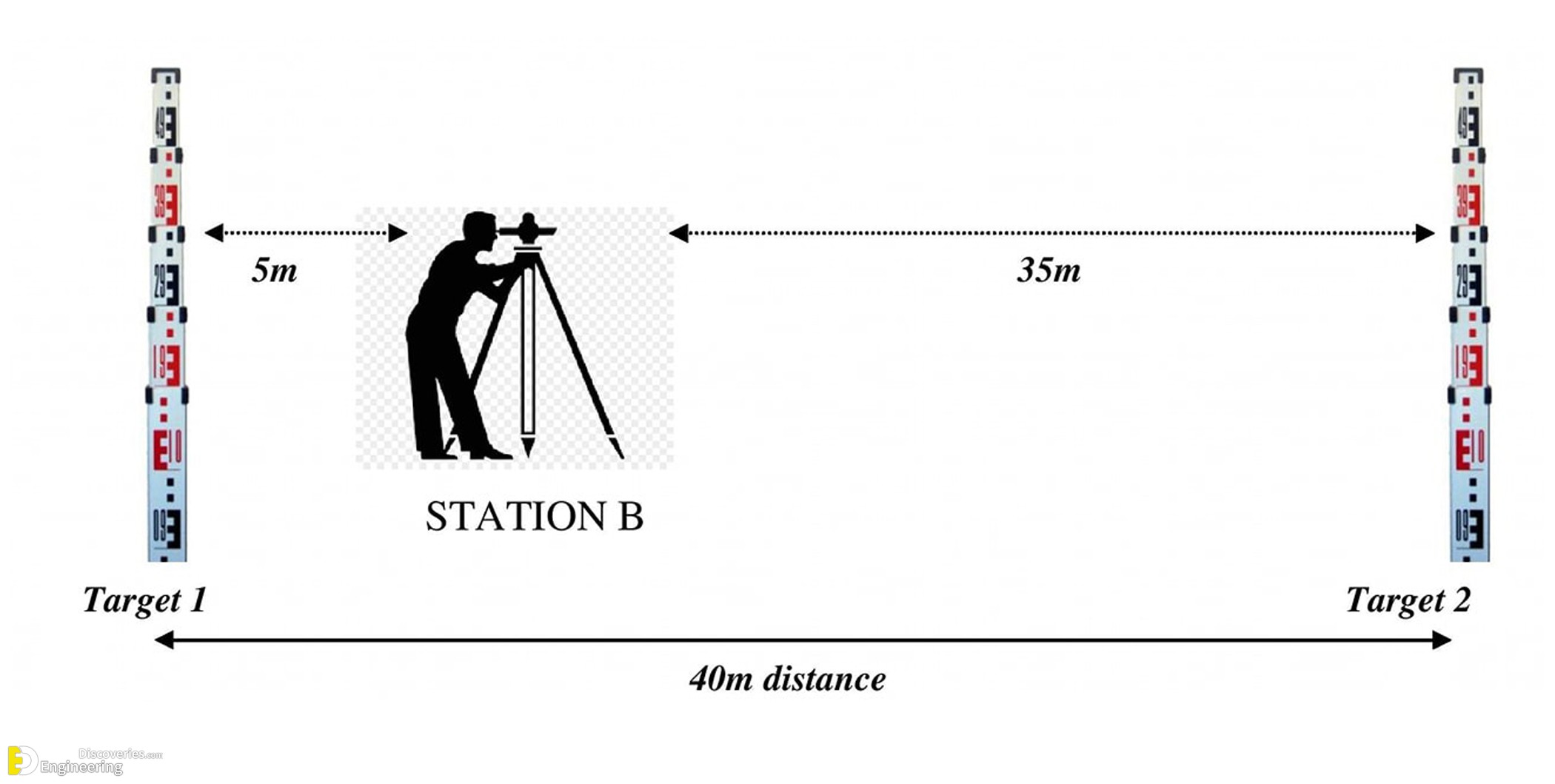
Take new readings from both targets at Station B. Accuracy is key during this phase.
Example Reading at Station B
| STATION B | Target 1 | Target 2 | Difference (T1 – T2) |
|---|---|---|---|
| For example | 117.7 cm | 183.90 cm | -66.20 cm (117.7 – 183.90) |
Again, calculate the difference between the two readings.
Step 6: Analyze the Level Error
Finally, the level error is determined by comparing the differences between Station A and Station B.
Formula:
Difference at Station A – Difference at Station B
= (-66.20) – (-66.20) = 0
A result of zero indicates no error. However, minor 2-3 mm discrepancies are acceptable depending on project precision.
Acceptable Error Margin
An error tolerance of 2-3 mm is generally considered acceptable. However, this range may vary based on specific project requirements or industry standards.
Click Here To See Brief Overview Of Levelling
Loading related articles...
Loading recent articles...
Loading featured articles...
