
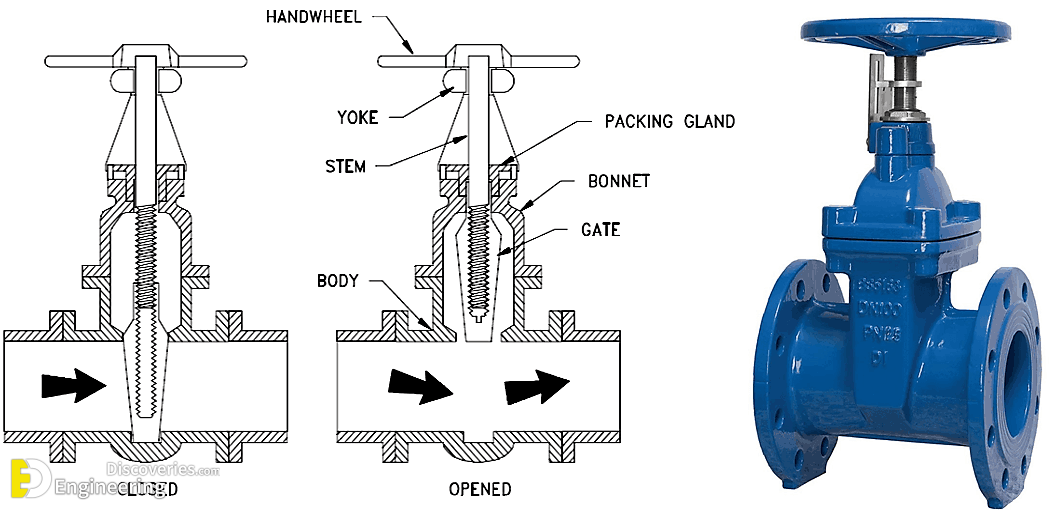
A gate valve can be defined as a type of valve that used a gate or wedge type disk and the disk moves perpendicular to flow to start or stop the fluid flow in piping. A gate valve is the most common type of valve used in any process plant. It is a linear motion valve used to start or stop fluid flow. In service, these valves are either in a fully open or fully closed position. When the gate valve is fully open, the disk of a gate valve is completely removed from the flow. Therefore virtually no resistance to flow. Due to this very little pressure drops when fluid passes through a gate valve. To achieve proper sealing, when the valve is fully closed, 360° surface contact is required between disk and seats. Gate valves should not be used for regulation or throttling of flow because accurate control is not possible. The high velocity of the flow in the partially open valve may cause erosion of the disc and seating surfaces and also creates vibration and noise.
Gate Valve Parts
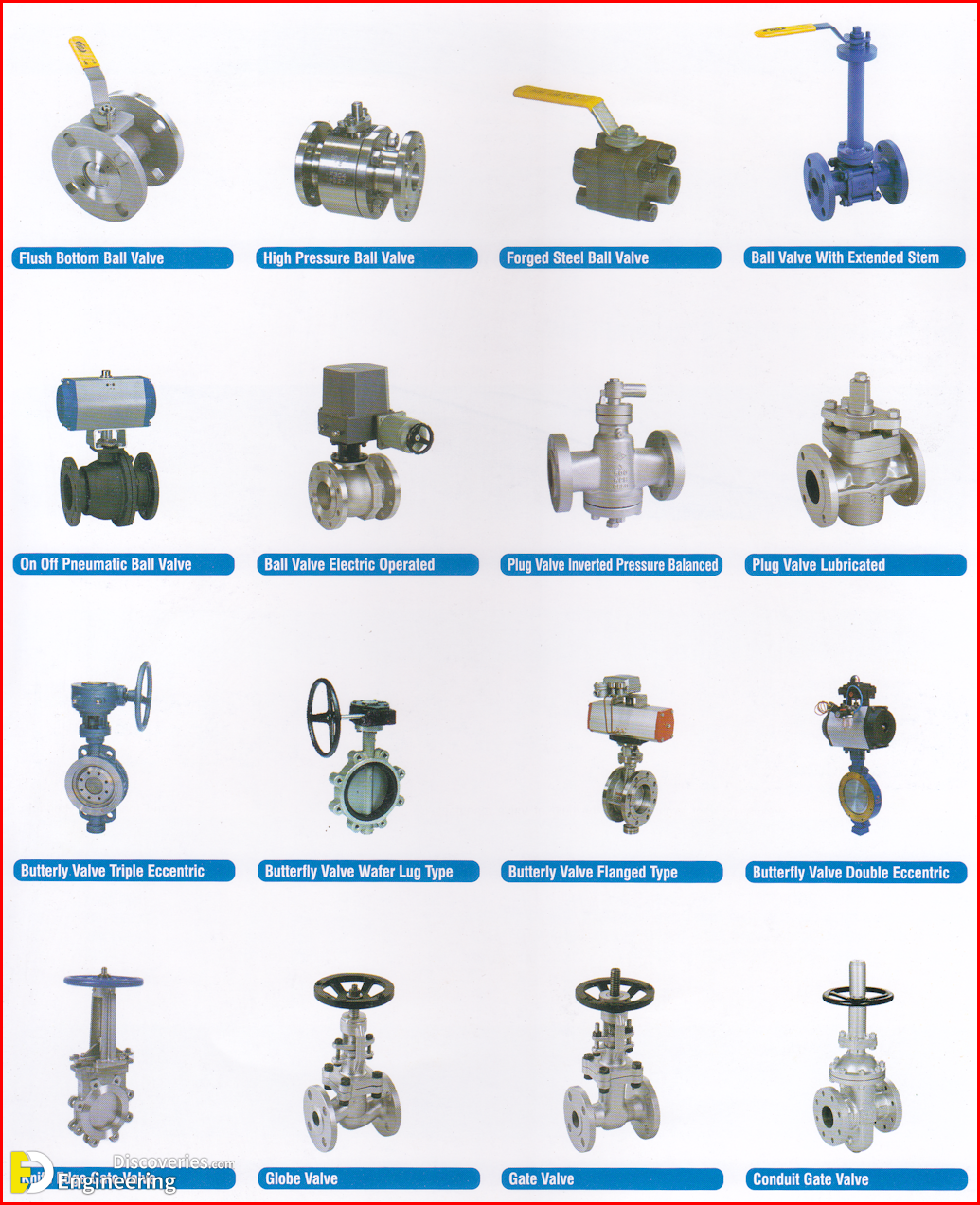
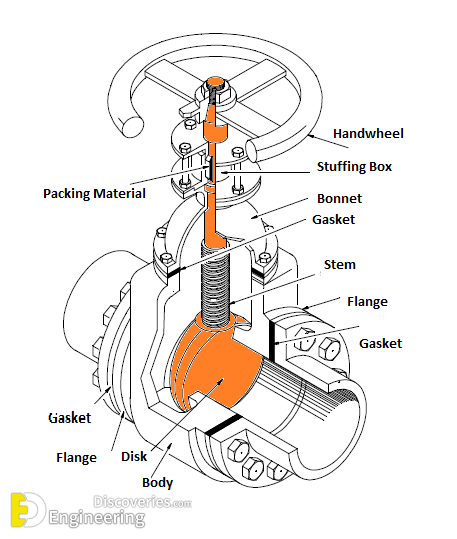
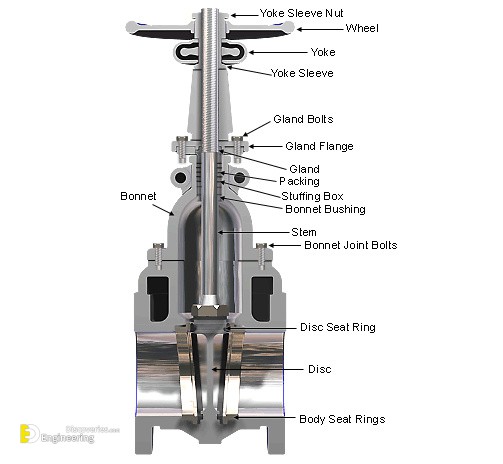
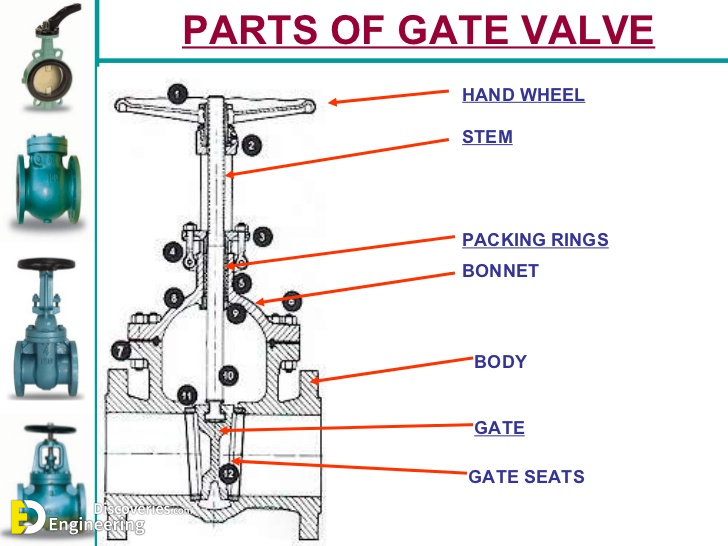
Gate Valve Types
Now, we know about the basics of the gate valve and parts of the gate valve. In close condition, the fluid pressure is on the gate, and in the high-pressure condition, it causes valve failure. The Gate valve is used in many industries like pharmaceutical, Oil and Gas industry, and marine industries. Let’s talk about different types of gate valves.
1. Solid wedge gate valve
It is a very popular type of gate valve. It is useful for almost all materials. Here wedge-type disk is used and fitted on the seat. It is used for moderate pressure conditions but not useful for the high-pressure condition because it sticks due to high-pressure causes leakage. Sometimes due to thermal expansion seat does not open and gets jammed. This phenomenon is called thermal binding.
2. Parallel disk or Split gate valve
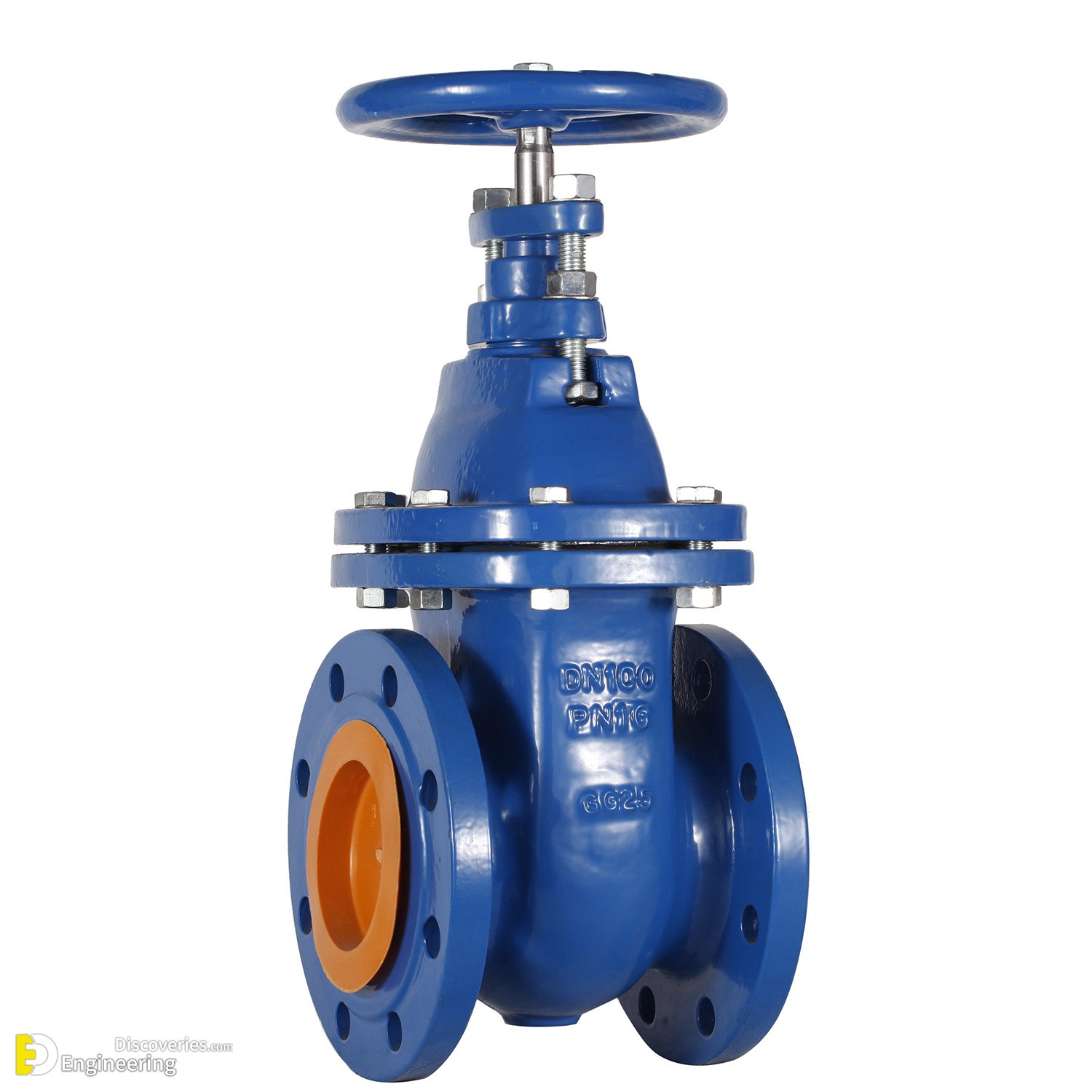
This type overcomes the problem of thermal binding due to its freedom of movement. Here two disks and seats are kept together by spring. It is used for low and medium-pressure applications.
3. Flexible wedge gate valve
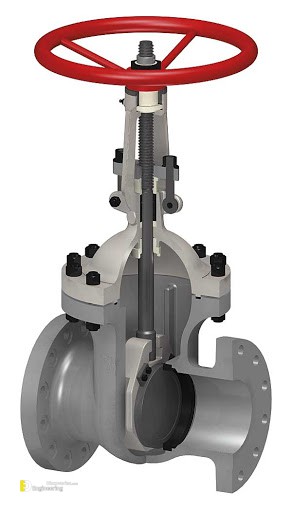
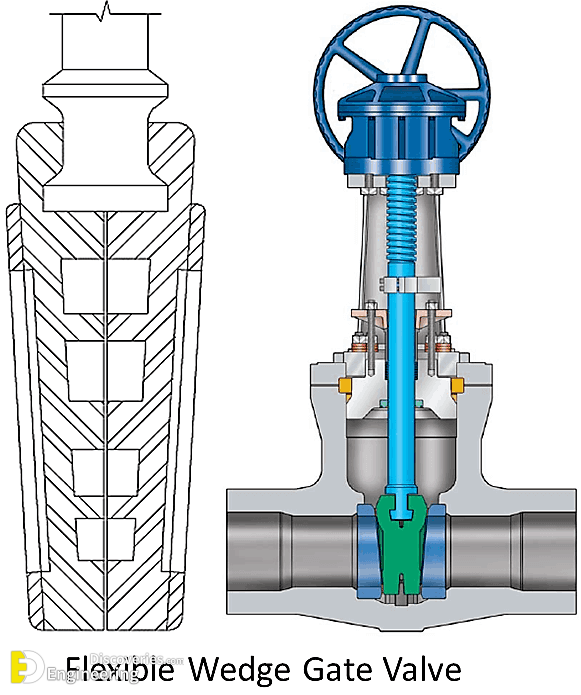
It consists of a small cut on the disk which fits on the seat. Due to this cut, we get leakage-free alignment between seat and disk. It is used in steam applications.
4. Non-rising and rising gate valve
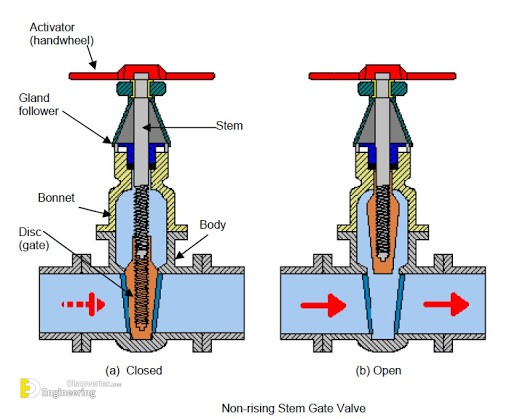
In the rising gate valve, the stem will go up when we open the gate valve and goes down on closing. In a non-rising valve, no verticle movement occurs. It is used when we have less space available.
Advantages of Gate valve
Disadvantages of Gate valve
Click Here To See Types Of Valves, Their Functions, And Symbols
Loading related articles...
Loading recent articles...
Loading featured articles...
