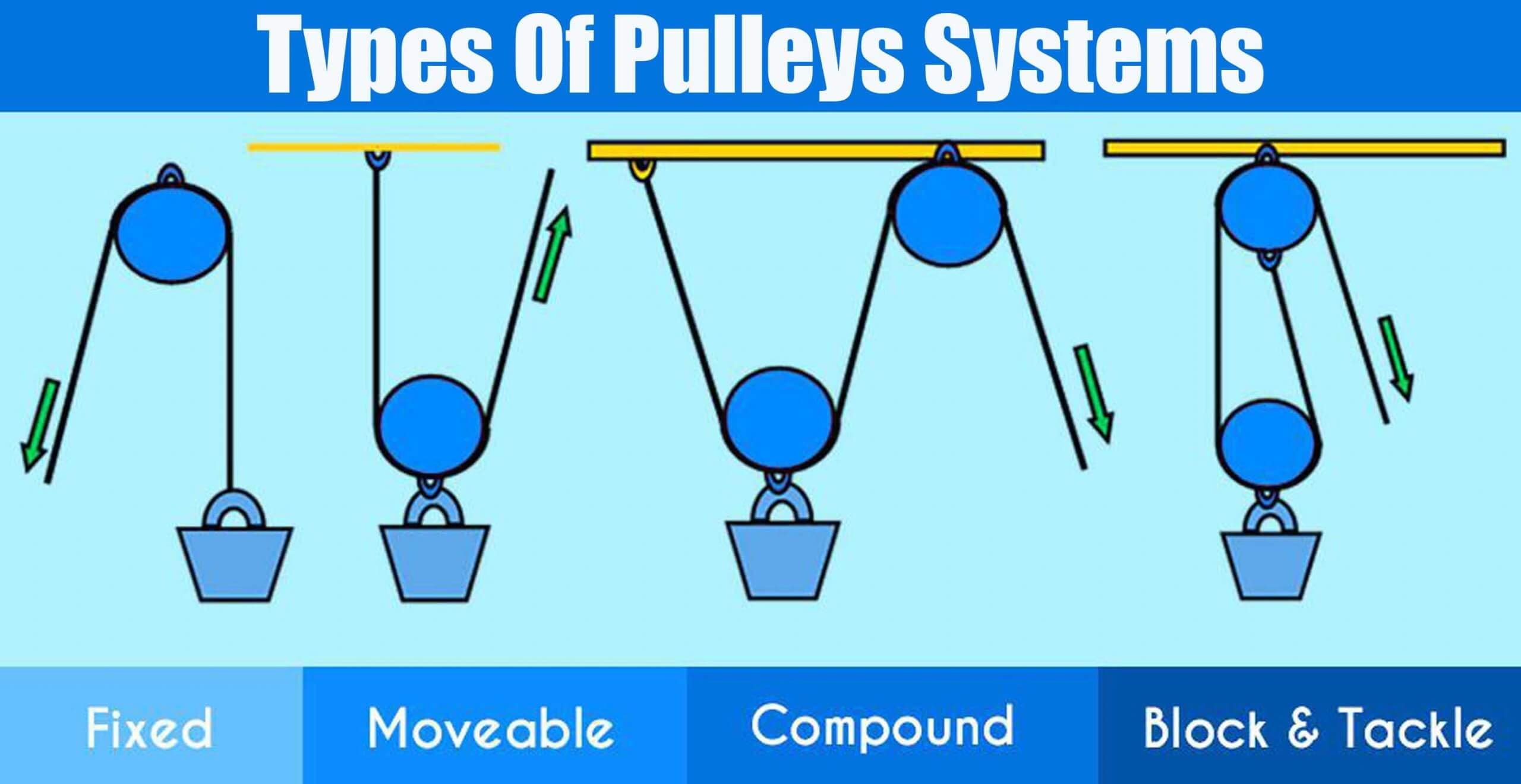
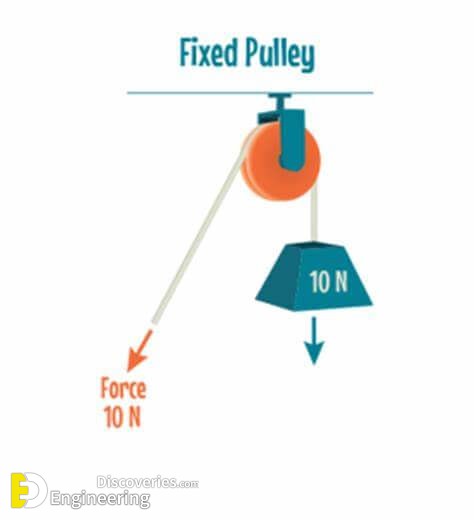
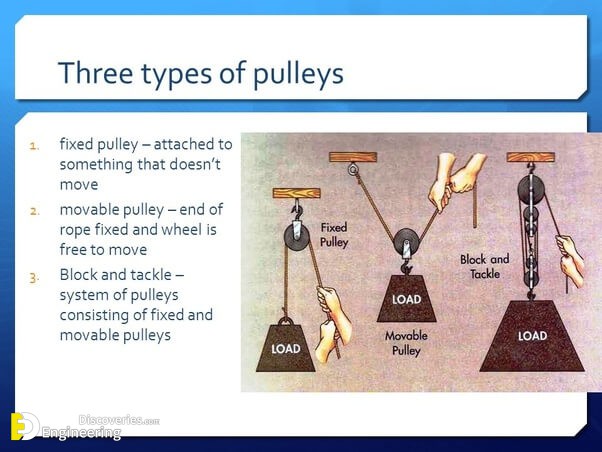
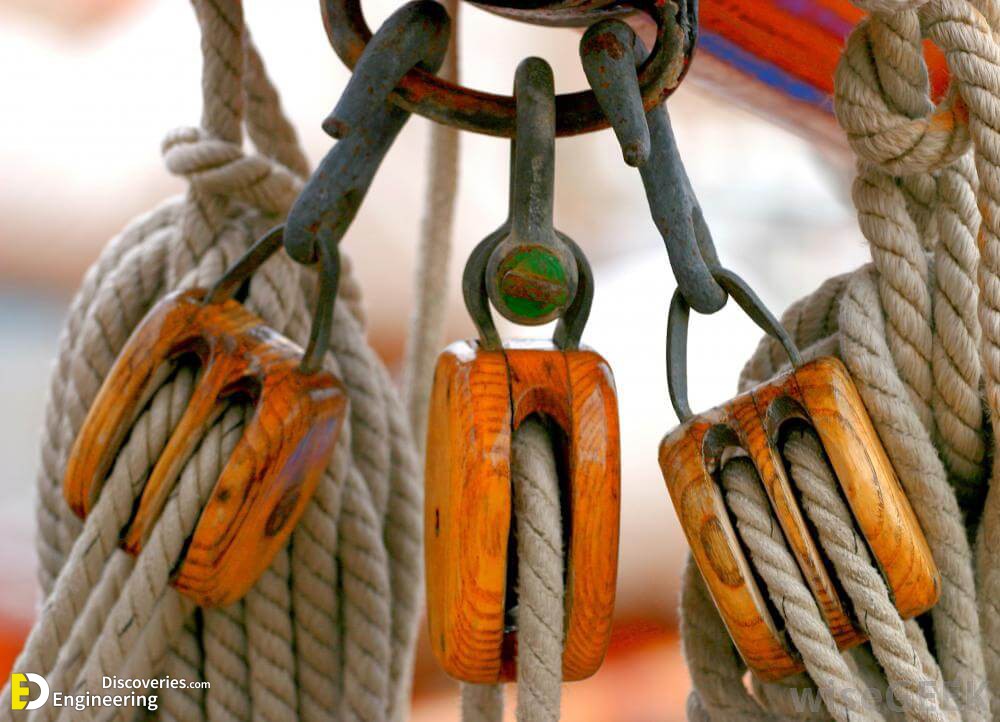
1- Fixed pulley: These types of pulleys have the axis fixed in one place. Though they can rotate or lift the weight up and down, they cannot move freely in any direction.
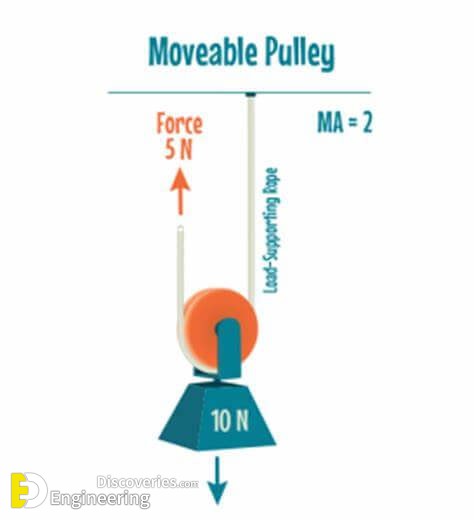
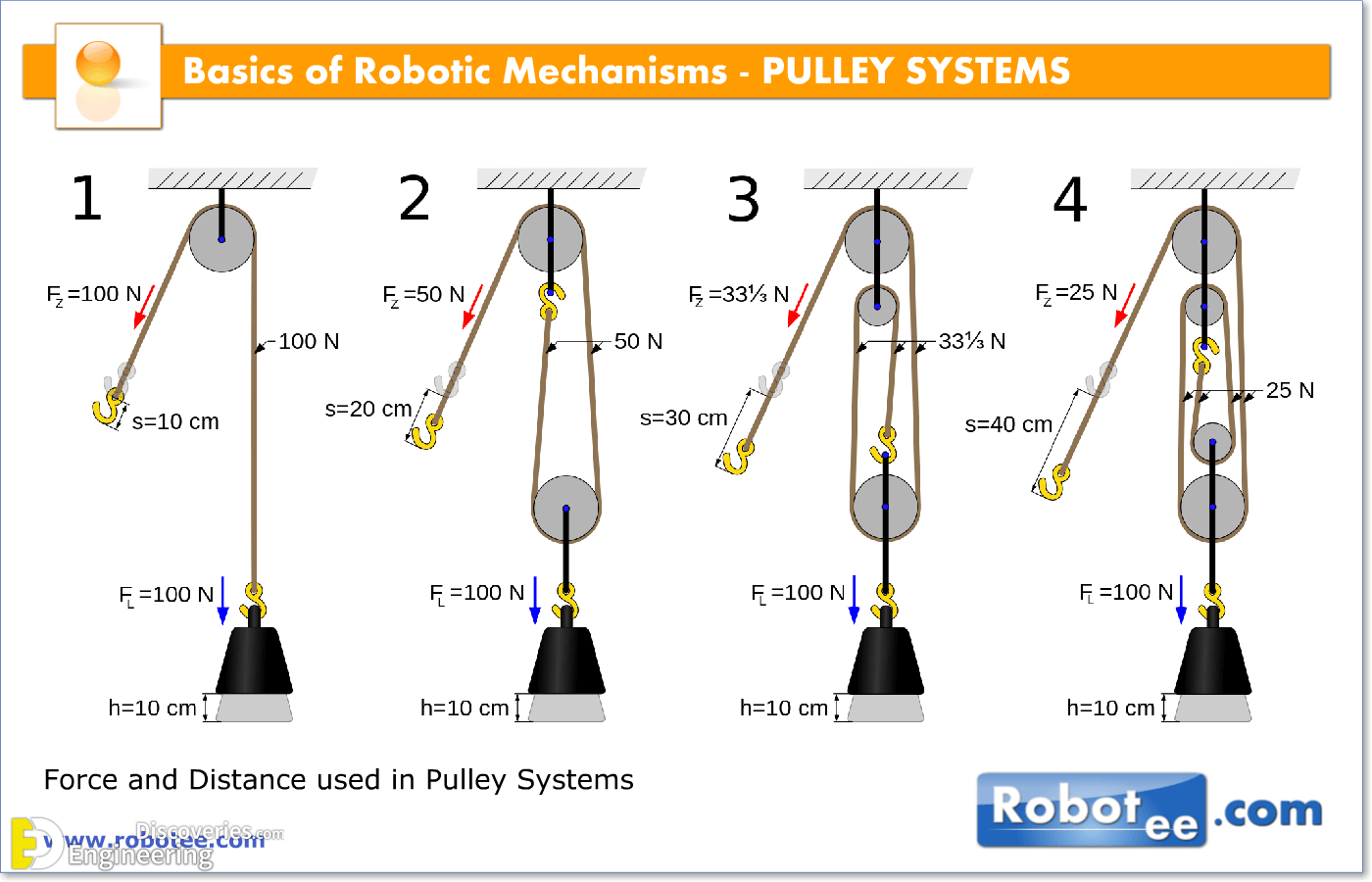
2- Moveable pulley: These have the axis on a movable mass. One single moving pulley is sustained at the two ends of the same chain but has the advantage of two. While in fixed pulleys the direction of the force can be changed, the same does not happen in the case of moveable pulleys. Usages of movable pulleys include:
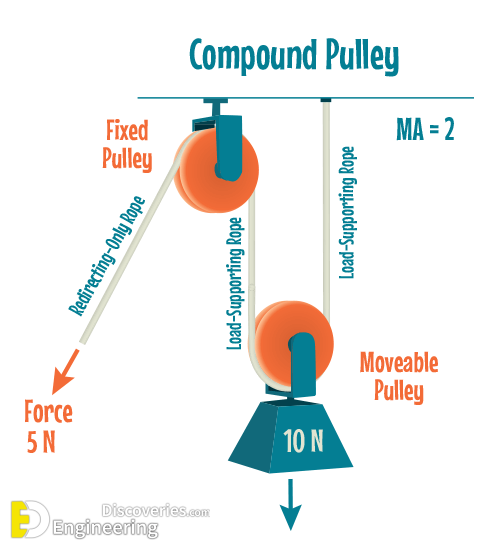
3- Compound: A compound pulley consists of both a fixed pulley and a moveable pulley. This combines the benefits of both a fixed and a moveable pulley. In a compound pulley, the weight is attached to the wheel of a moveable pulley, which itself is strung to a rope attached to a fixed pulley. With a compound pulley, you can redirect the required direction of the force as well as the total workload for the force.
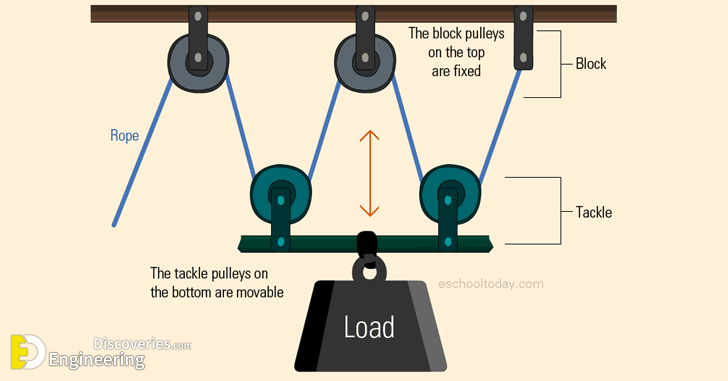
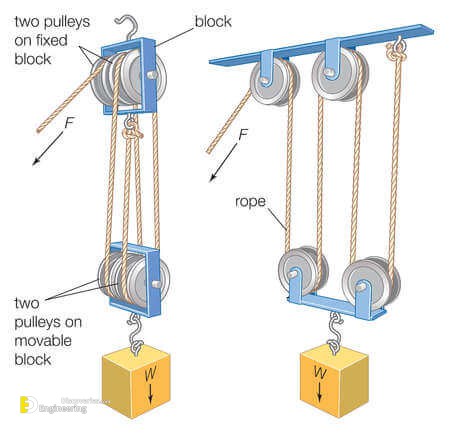
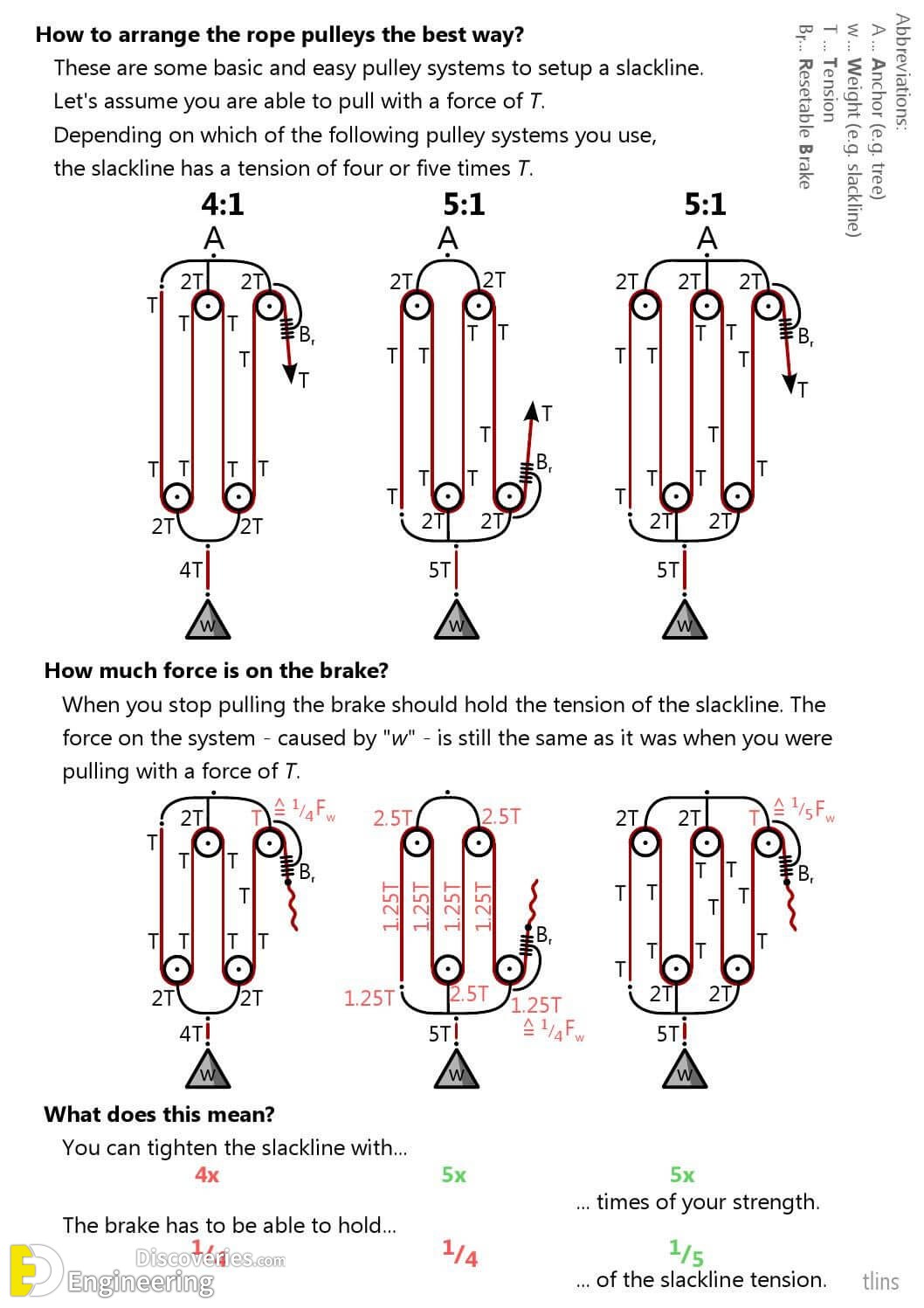
4- Block and Tackle: A block and tackle is a specialized form of compound pulley that can dramatically lessen the required amount of work to move a heavy object. A block-and-tackle pulley system consists of several fixed and moveable pulleys arranged parallel with one another; fixed pulleys aligned with fixed and moveable pulleys with moveable. Each compound pair is attached to the next pair, and each set reduces the total work required. This pulley system is popularly attributed to Archimedes, the famous ancient inventor and mathematician.
5. Cone pulley: As the name denotes, these types of pulleys consist of cone-shaped pulleys arranged together for moving the weight. The arrangement is such that the pointed end of one the cone-shaped pulley is attached or pointed towards the larger base of the other.
These consist of more than two pulleys, depending on the weight and the speed required for movement. These are mostly used in construction sites and as part of other machines. Some users of cone-shaped pulleys:
Loading related articles...
Loading recent articles...
Loading featured articles...
