
Concrete is one of the most widely used construction materials, valued for its strength and versatility. However, achieving optimal strength and durability requires precise mixing and consistency. Improper handling can lead to segregation and bleeding, two common issues that compromise the quality of concrete. Let’s explore these issues in detail.
What Is Segregation in Concrete?
Segregation occurs when the components of concrete—such as coarse aggregates, fine aggregates, cement, and water—separate during mixing, transportation, or placement. This separation disrupts the homogeneity of the mix and results in weaker structures.
Causes of Segregation
Effects of Segregation
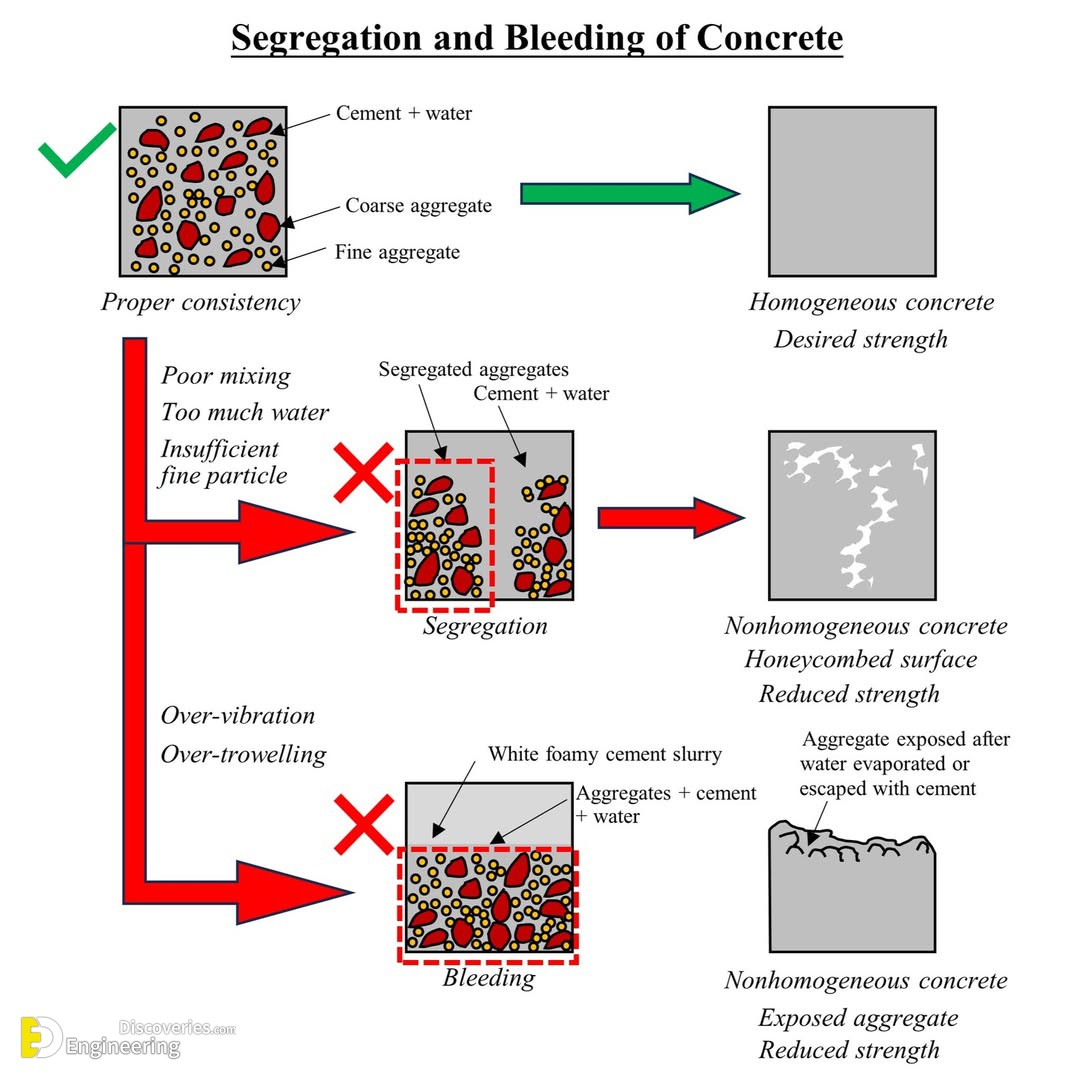
What Is Bleeding in Concrete?
Bleeding is the upward movement of water in freshly mixed concrete. This results in the formation of a water layer or cement slurry on the surface. While some bleeding is normal, excessive bleeding can weaken the concrete’s properties.
Causes of Bleeding
Effects of Bleeding
Preventing Segregation and Bleeding
Achieving Proper Consistency
Effective Mixing Practices
Use Admixtures
Monitor Placement and Finishing
Conclusion
Segregation and bleeding are critical issues that can significantly reduce the quality and strength of concrete. By understanding their causes and effects, construction professionals can take preventive measures to produce durable and homogenous concrete structures. Proper mixing, proportioning, and curing practices are essential for avoiding these problems and ensuring the long-term performance of concrete.
Click Here To See Types Of Concrete Cracks And How To Prevent Them
Loading related articles...
Loading recent articles...
Loading featured articles...
