
Friction is a powerful force that influences everyday life. It acts when two surfaces interact and can either help or hinder movement. Below, you’ll explore the four primary types of friction and how they play a role in the world around us.
What Is Friction?
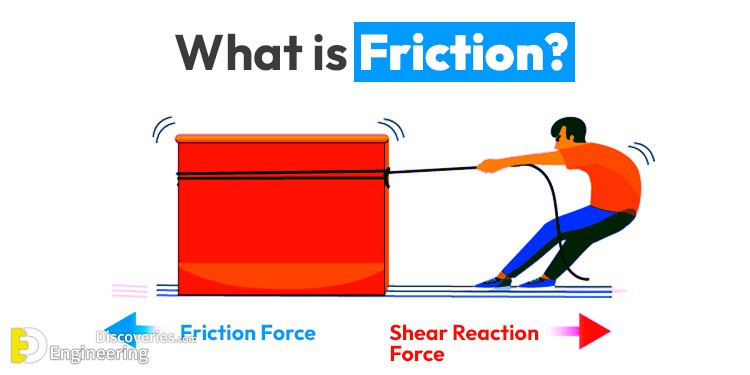
Friction is a resistive force that occurs when the surface of one object moves or tries to move across another. This force works against the direction of motion, slowing objects down or preventing them from moving at all.
1 . Static Friction: The Force That Holds Still
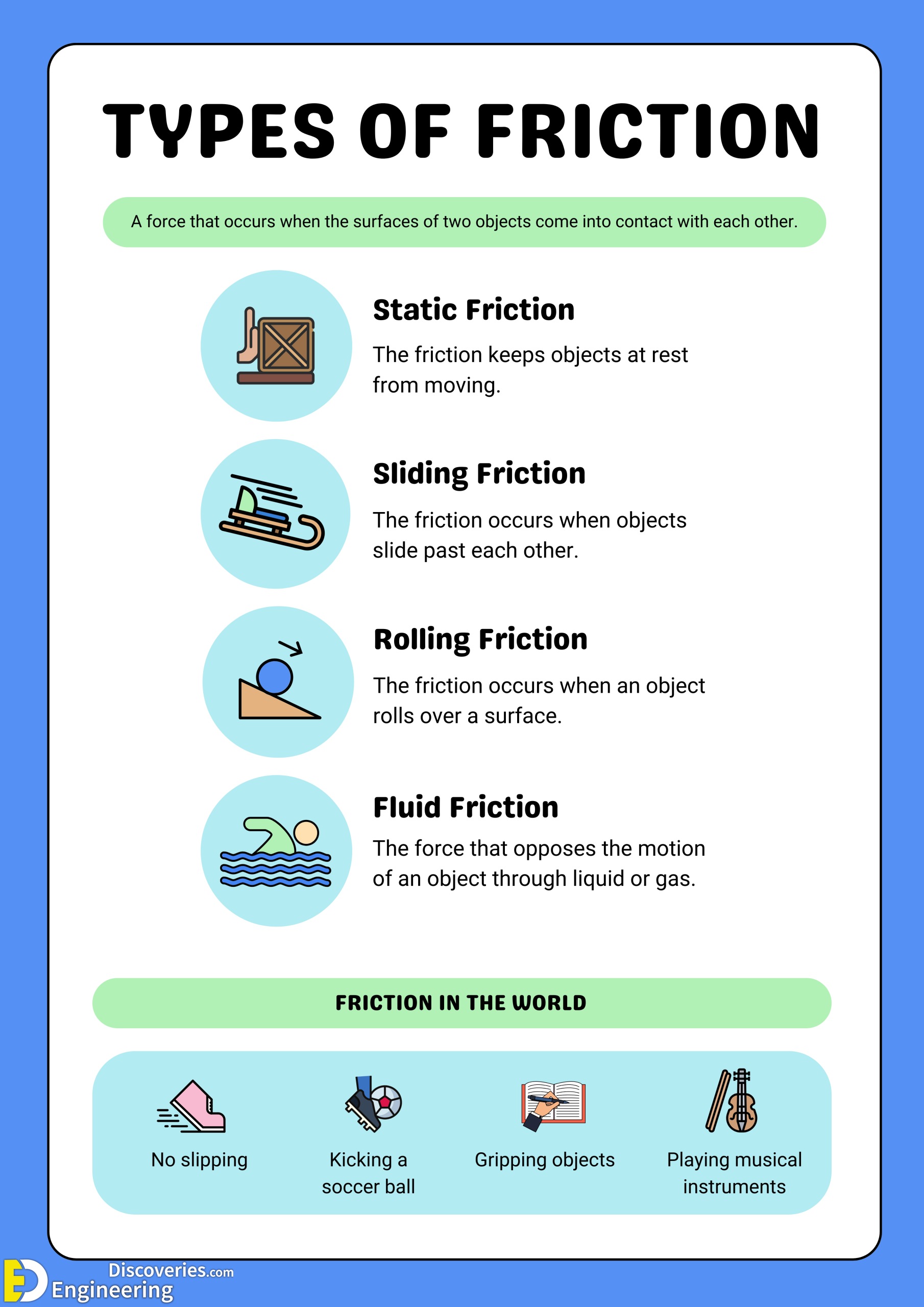
Static friction is the frictional force that prevents motion. It occurs when an object is at rest and a force tries to move it. This friction is strongest just before movement begins.
Example: A heavy box that won’t budge until you push harder. Static friction resists until the applied force exceeds it.
Key Characteristics of Static Friction
2. Sliding Friction: Resistance in Motion
Sliding friction occurs when two surfaces slide against each other. It’s weaker than static friction but still slows movement.
Example: A sled gliding across the snow or a book pushed across a table.
Where You See Sliding Friction
3. Rolling Friction: Smooth but Present
Rolling friction is what resists the motion of an object rolling over a surface. This is typically weaker than sliding friction, which is why wheels and balls are used to reduce effort.
Example: A soccer ball rolling across a field or car tires moving on the road.
Benefits of Rolling Friction
4. Fluid Friction: Moving Through Liquids and Gases
Fluid friction happens when an object moves through a fluid—either a liquid or gas. It’s often referred to as “drag” or “air resistance.”
Example: A swimmer cutting through water or a plane flying through air.
Where Fluid Friction Occurs
Friction in Real Life: Everyday Uses
Friction isn’t just a scientific term. It’s essential in your daily life.
1. No Slipping
Friction between your shoes and the floor keeps you from slipping. Without it, walking would be nearly impossible.
2. Kicking a Soccer Ball
Kicking a ball involves both static and rolling friction. The grass adds resistance, influencing the ball’s speed and direction.
3. Gripping Objects
Whether holding a pen or opening a jar, friction gives your hands the grip needed to hold objects securely.
4. Playing Musical Instruments
From plucking strings to pressing piano keys, friction creates sound and enables control.
Click Here To See Types Of Shear Reinforcement In Reinforced Concrete Slabs
Loading related articles...
Loading recent articles...
Loading featured articles...
