
Trusses are amazing structures you’ve probably seen many times without even realizing it. They’re in bridges, roofs, and even bicycle frames! At its core, a truss is a structure made of straight members connected at their ends to form a series of triangles. This triangular shape is what gives trusses their incredible strength and rigidity.
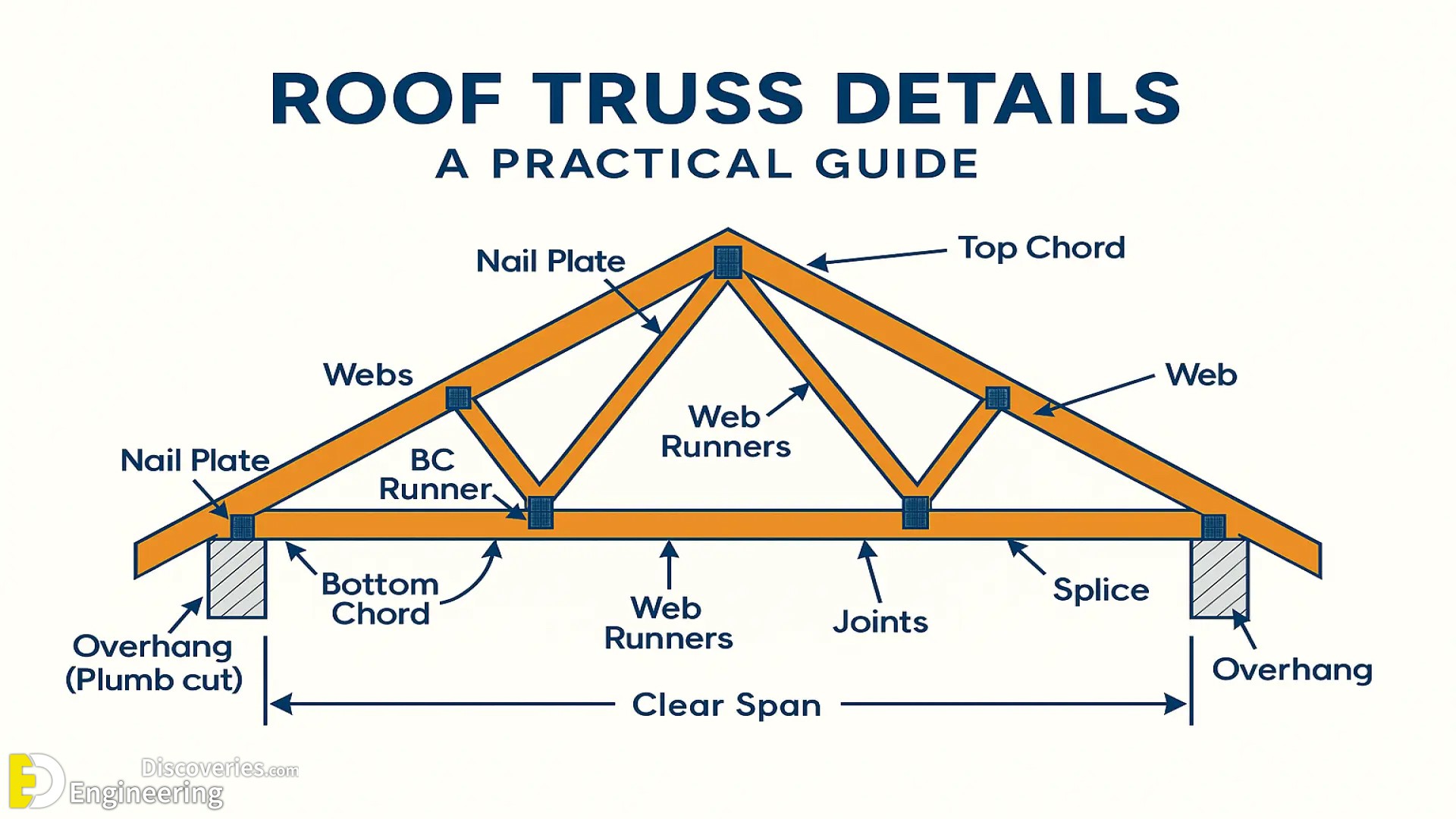
The Basics of a Truss
Think of a truss as a team of individual beams working together. Each of these beams, or members, is connected at a joint (also called a node). The main idea is that forces are only applied at these joints, not in the middle of a member. This means each member is either being pulled apart (in tension) or pushed together (in compression).
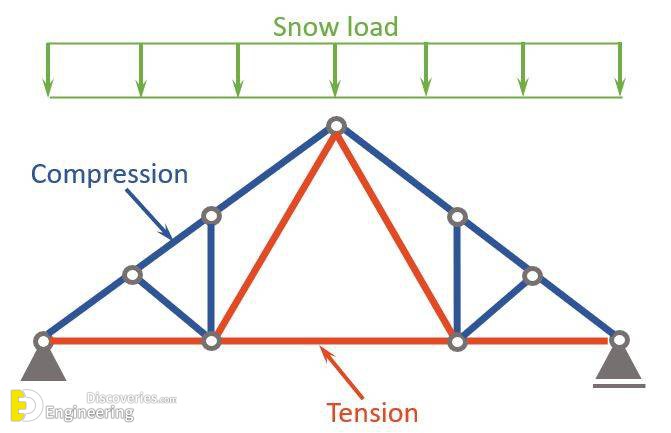
The top and bottom members of a truss are called the top chord and bottom chord, respectively. The members connecting the top and bottom chords are known as the webbing.
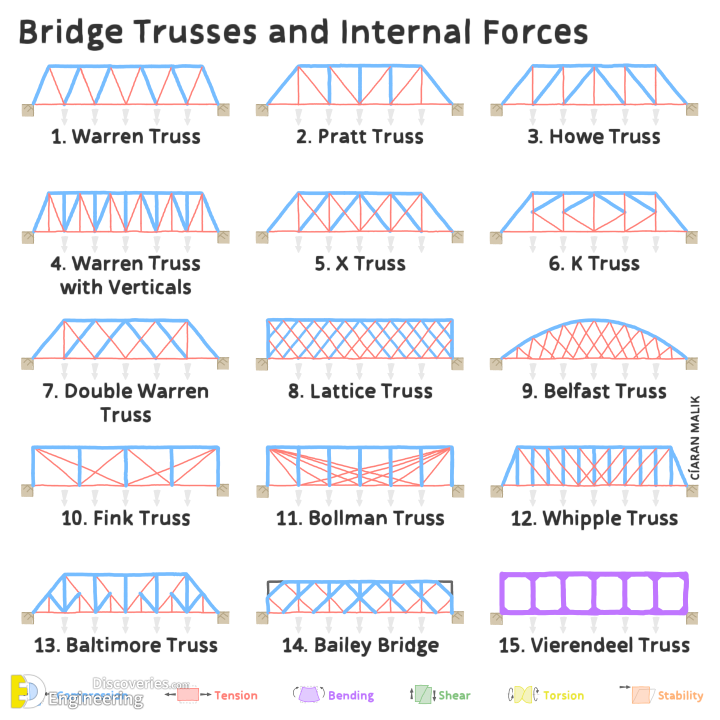
There are several types of trusses, each with its own unique design and advantages. Some of the most common include:
The Secret to Their Strength: Statistics
The reason trusses are so strong is due to a principle called statics. This simply means the truss is in a state of equilibrium—it’s not moving. All the forces acting on the truss are in perfect balance. To analyze a truss, we use the fundamental idea that at any point in the structure, the sum of all forces is zero.
Before diving into the analysis, there are two crucial first steps:
How to Analyze a Truss: Two Main Methods
Once you’ve determined the support reactions, you can figure out the force in each member using one of two primary methods: the Method of Joints or the Method of Sections.
Method of Joints
This method is ideal when you need to determine the force in every member of the truss. As the name suggests, it involves looking at each joint one by one.
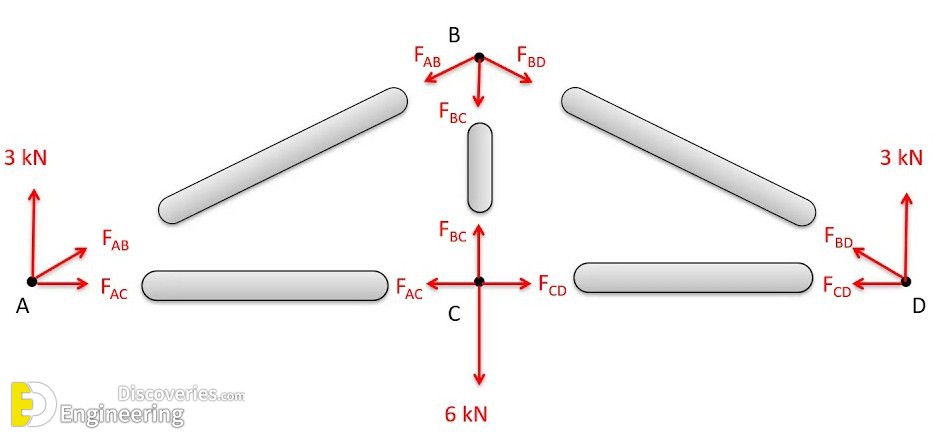
Here’s the process:
Method of Sections
What if you only need to find the force in a few specific members in the middle of a large truss? The Method of Sections is your go-to for a quicker solution.
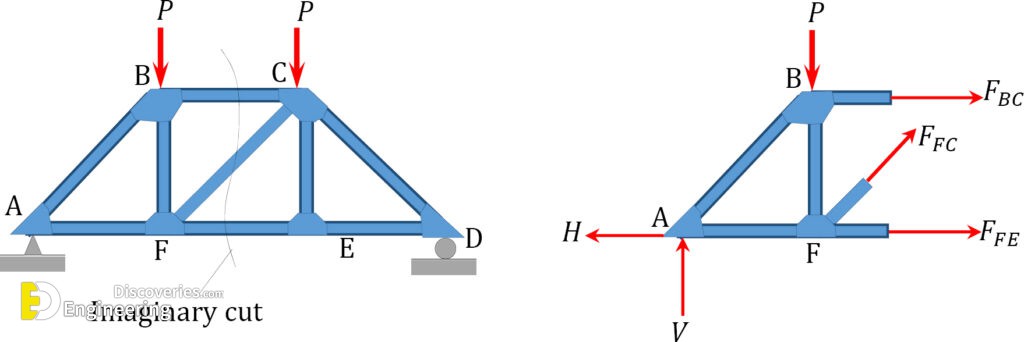
Here’s how it works:
By understanding these fundamental principles and methods, you can analyze the forces within these impressive and efficient structures.
This video provides a helpful visual explanation of how to analyze a truss using the Method of Joints.
Click Here To See Understanding Roof Truss Elements, Angles, And The Basics!
Loading related articles...
Loading recent articles...
Loading featured articles...
