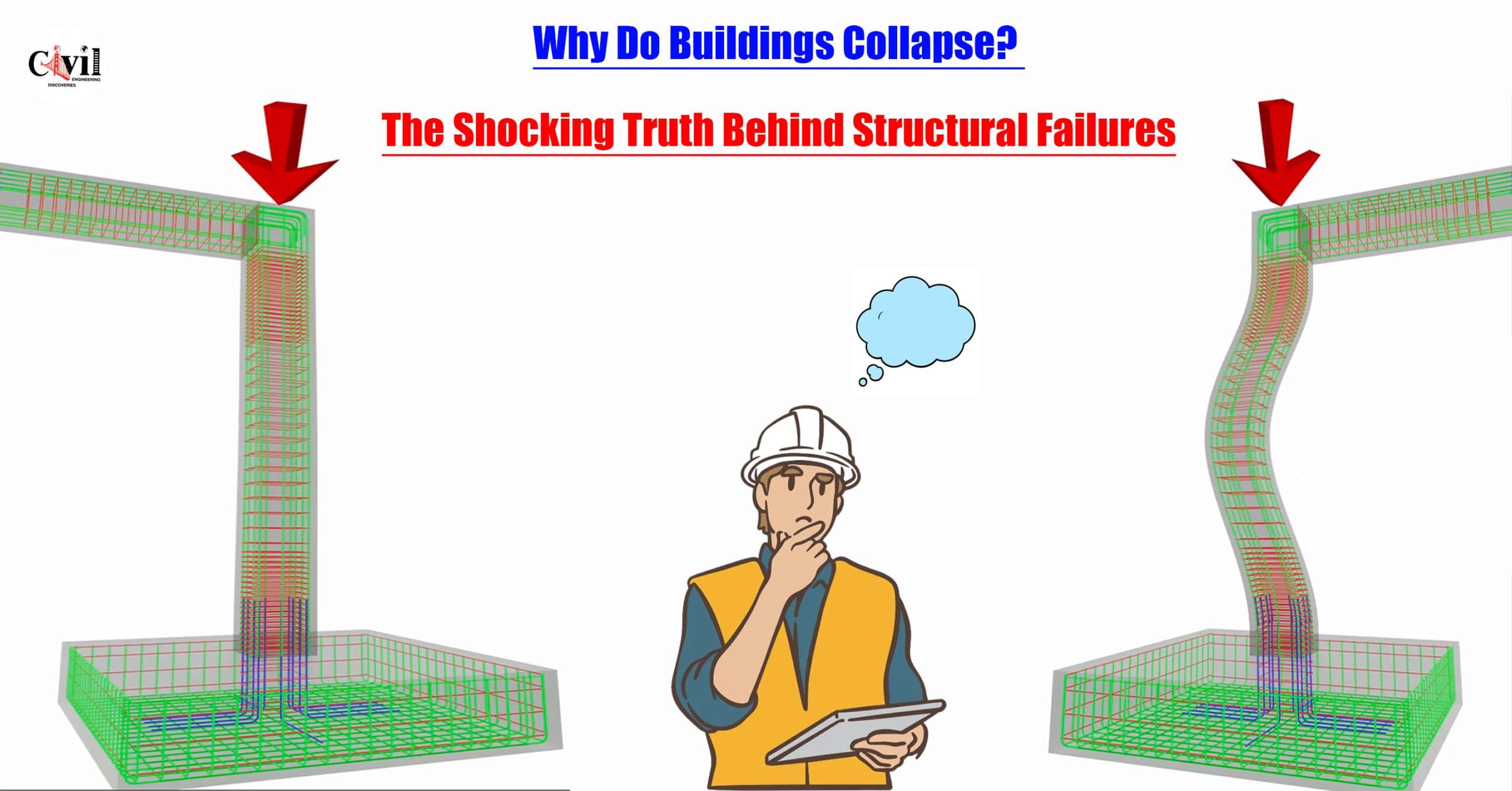
Buildings are designed to withstand various forces, including gravity, wind, and seismic activity. However, one of the most significant structural failures that can lead to a building collapse is column buckling. This phenomenon occurs when a column loses its stability due to excessive compressive loads, ultimately leading to catastrophic failure. In this article, we explore the causes, consequences, and prevention strategies associated with column buckling to ensure safe and stable building designs.
What Is Column Buckling?
Column buckling is a structural failure mode in which a slender column subjected to compressive forces deforms laterally and eventually collapses. Unlike crushing failure, which results from the material’s inability to withstand compression, buckling occurs due to instability in the column’s geometry. This is particularly common in long and thin columns, where lateral deflections compromise their load-bearing capacity.
Key Factors Influencing Column Buckling
Several factors determine the susceptibility of a column to buckling:
Types of Column Buckling
Buckling can occur in various forms, depending on the characteristics of the column and external conditions:
Elastic Buckling
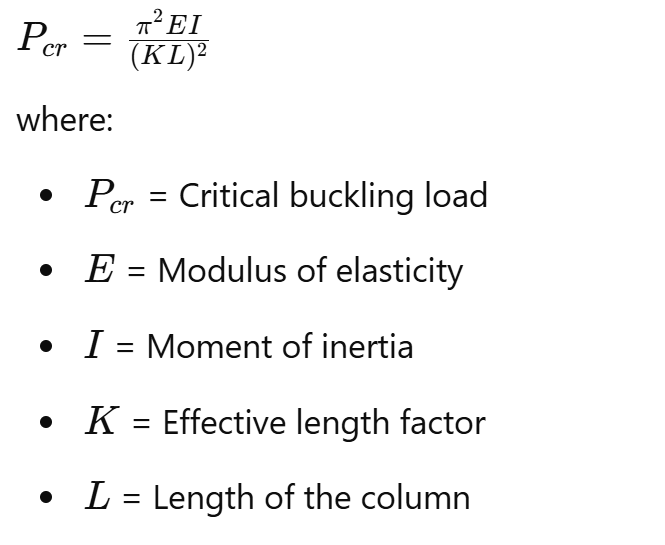
This occurs in columns that remain within the elastic limit of the material but still fail due to instability. It is often analyzed using Euler’s critical load formula:
Inelastic Buckling
When a column reaches its yield strength before buckling, inelastic buckling occurs. This is common in shorter, stockier columns where material failure and instability occur simultaneously.
Local Buckling
This type of failure is observed in thin-walled columns, such as those made of steel plates or hollow sections, where certain regions of the column buckle independently of the entire structure.
Common Causes of Column Buckling in Buildings
1. Poor Structural Design
Inadequate design calculations, improper material selection, and incorrect assumptions about load conditions can lead to columns that are too slender or weak to withstand applied forces.
2. Overloading
Exceeding the designed load capacity of a column increases compressive stress, making it more susceptible to buckling. This often happens in buildings where additional floors are added without reinforcing existing columns.
3. Weak Foundation and Soil Settlement
A weak or shifting foundation can cause differential settlements, resulting in uneven load distribution on columns. This can lead to increased bending moments and premature buckling.
4. Construction Deficiencies
Poor workmanship, including improper reinforcement placement, inadequate curing of concrete, and misalignment of columns, can significantly reduce a column’s resistance to buckling.
5. Corrosion and Material Degradation
In steel and reinforced concrete columns, corrosion of steel reinforcements weakens the structural integrity, reducing load-bearing capacity and increasing the likelihood of buckling.
6. Seismic and Wind Loads
Lateral forces due to earthquakes or high winds can induce additional bending stresses in columns, increasing the probability of buckling failure.
Preventive Measures to Avoid Column Buckling
1. Optimized Structural Design
Engineers should consider the following strategies to design columns resistant to buckling:
2. Load Management
3. Strengthening Foundations
4. Quality Construction Practices
5. Regular Maintenance and Inspections
6. Seismic and Wind Resistance Measures
Loading related articles...
Loading recent articles...
Loading featured articles...
