
Column reinforcement plays a critical role in ensuring structural safety and durability. Lapping of bars is a common practice in reinforced concrete construction. However, the method of lapping and bar placement significantly impacts construction quality. While both top and bottom bars can technically be joggled, industry practice favors the top bar. This article explains why the top bar should be joggled and the correct lapping procedure to follow.
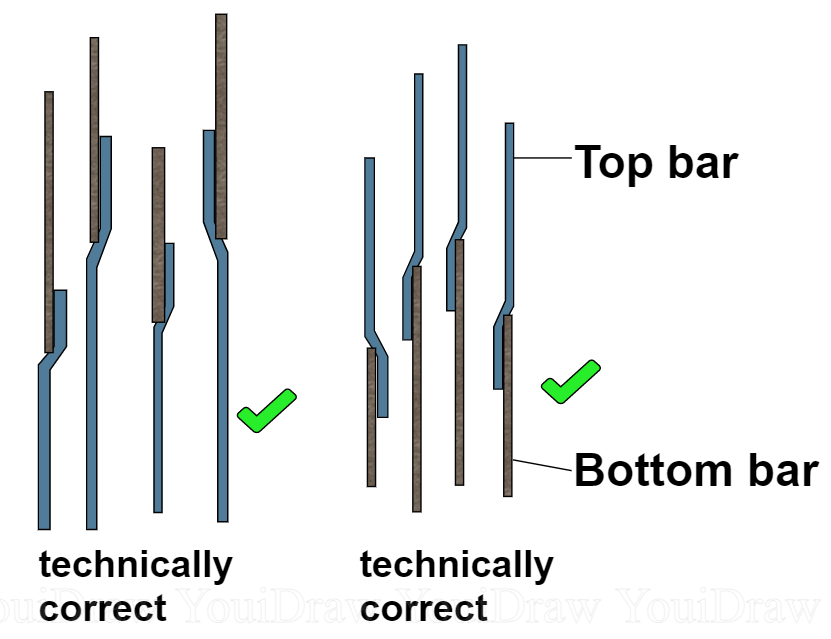
Why Joggling the Top Bar is Preferred
Avoiding Concrete Damage
If you attempt to joggle the bottom bar after concreting, cracks may develop. The force applied to bend the bar can break portions of the hardened concrete. This weakens the column and compromises its load-bearing ability.
Ease of Handling and Accuracy
The top bar remains free before concreting, making it easier to joggle with precision. Bending machines or manual tools can be used to achieve accurate joggles. These can then be tied neatly to the bottom bars without disturbing the structural setup.
Site Congestion Issues
Once the column is cast, the bottom bars become inaccessible. Handling bending tools within congested reinforcement zones is nearly impossible. Joggling the top bar eliminates this difficulty and ensures smoother progress on site.
Maintaining Clear Cover
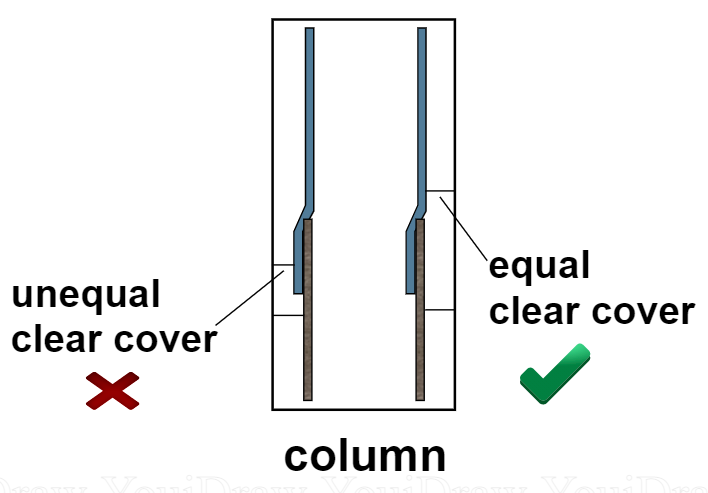
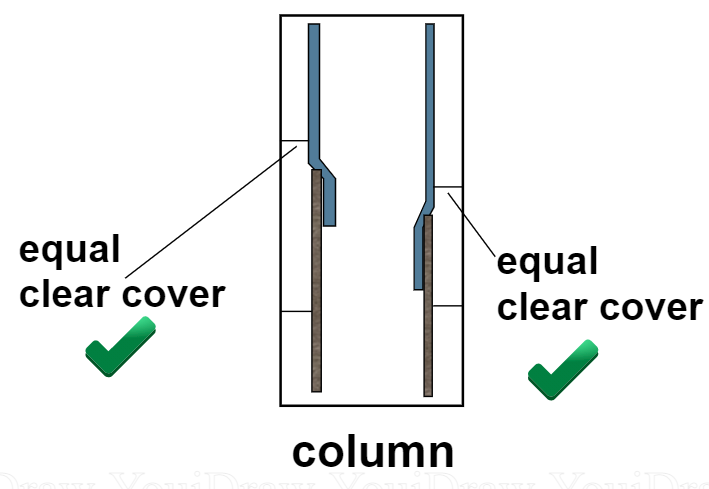
Using joggled top bars helps achieve the specified clear cover for reinforcement. Correct cover is essential for durability and protection against corrosion. The top bar allows more flexibility in achieving the correct alignment without reducing cover thickness.
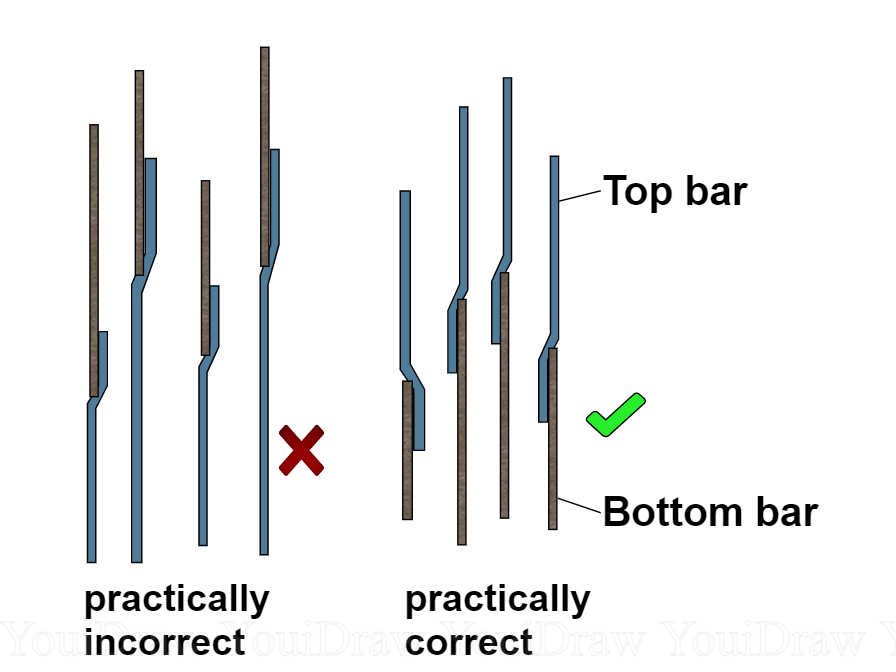
Correct Lapping Procedure in Column Bars
Placement of Joggled Bars
The joggled top bar should always be placed inside the bottom bar. If positioned on the outer side, the clear cover at the lapping zone is reduced. Maintaining uniform cover throughout the column ensures structural integrity.
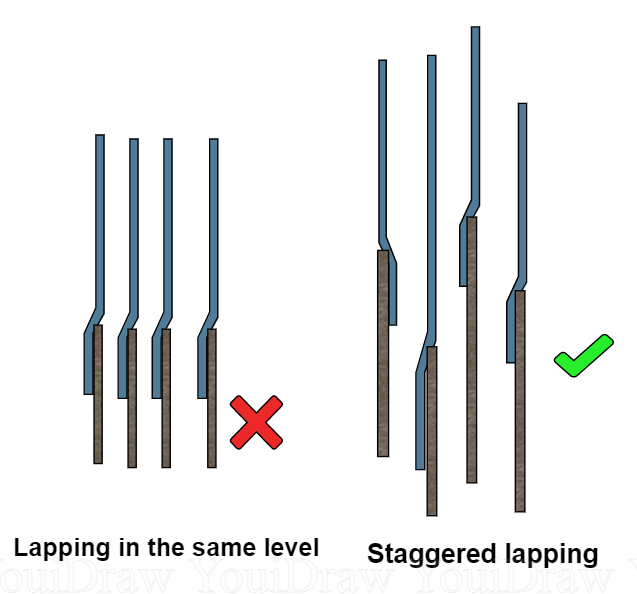
Staggering of Laps
All laps should not fall within the same section. Staggering ensures uniform load transfer and avoids weak points in the column. Best practice allows a maximum of 50% of column bars to lap in the same level.
Stirrups in the Lapping Zone
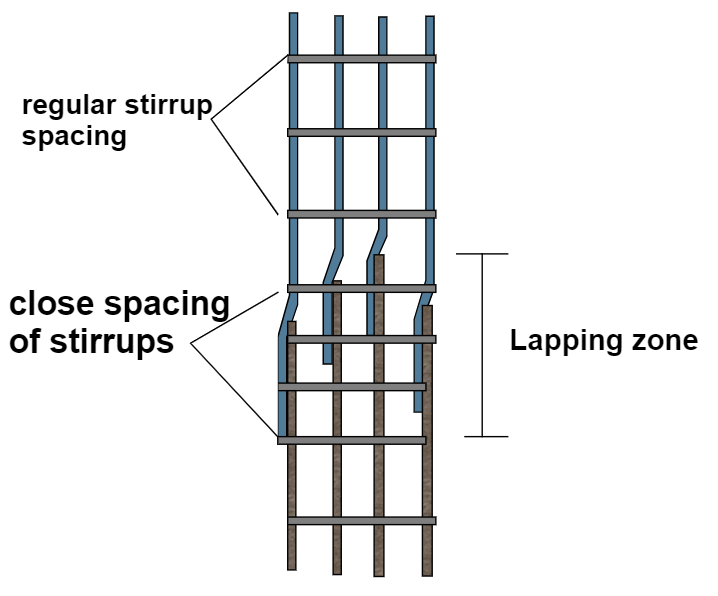
The lapping zone requires additional lateral support. Stirrups or ties should be provided at closer spacing in this region. Extra confinement prevents bar buckling and enhances strength under compressive forces.
Key Benefits of Correct Lapping
Click Here To See Understanding Load Transfer In Building Structures
Loading related articles...
Loading recent articles...
Loading featured articles...
