
Weirs are one of the most commonly used structures in hydraulic engineering to measure and control water flow in open channels. They are simple yet highly effective tools for water regulation and are frequently employed in irrigation, hydropower, and flood management systems. This guide will provide a detailed exploration of weirs, their types, governing equations, and practical applications.
What is a Weir?
A weir is a barrier constructed across an open channel, such as a river or canal, to regulate or measure the flow of water. The water flows over the top edge of the weir, known as the crest. The shape and design of the weir influence its discharge capacity, making it suitable for specific flow conditions.
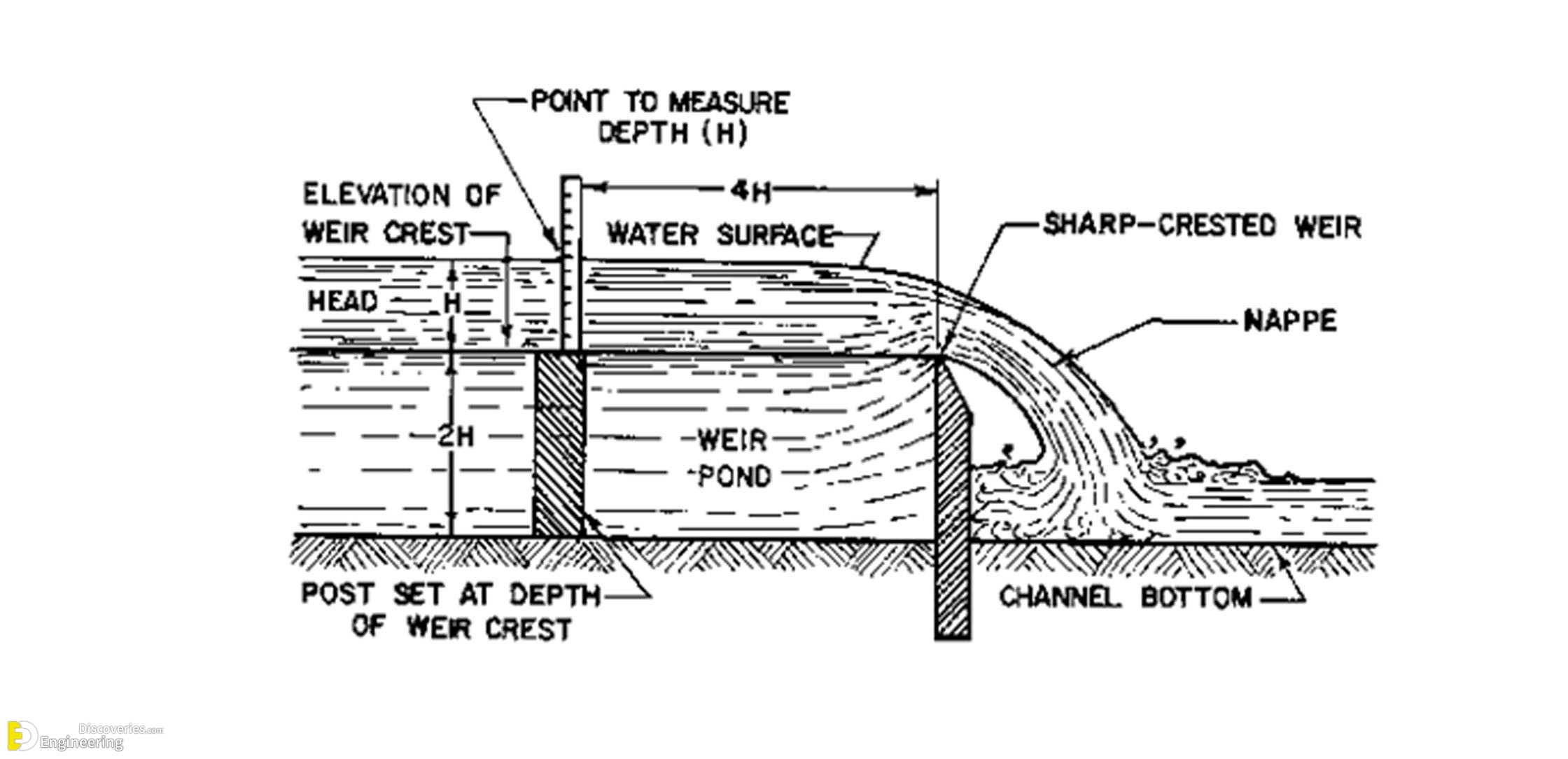
Weirs are categorized based on their geometry and function. Common types include rectangular, Cipolletti, triangular (or V-notch), and compound weirs. Each type has unique equations and parameters to estimate the flow accurately.
Key Parameters in Weir Flow Analysis
To understand the behavior of water flow over a weir, certain parameters are essential:
Types of Weirs and Governing Equations
1. Rectangular Weirs
A straight horizontal crest characterizes rectangular weirs. These weirs are commonly used for large flows and are ideal for simple, accurate discharge measurements.
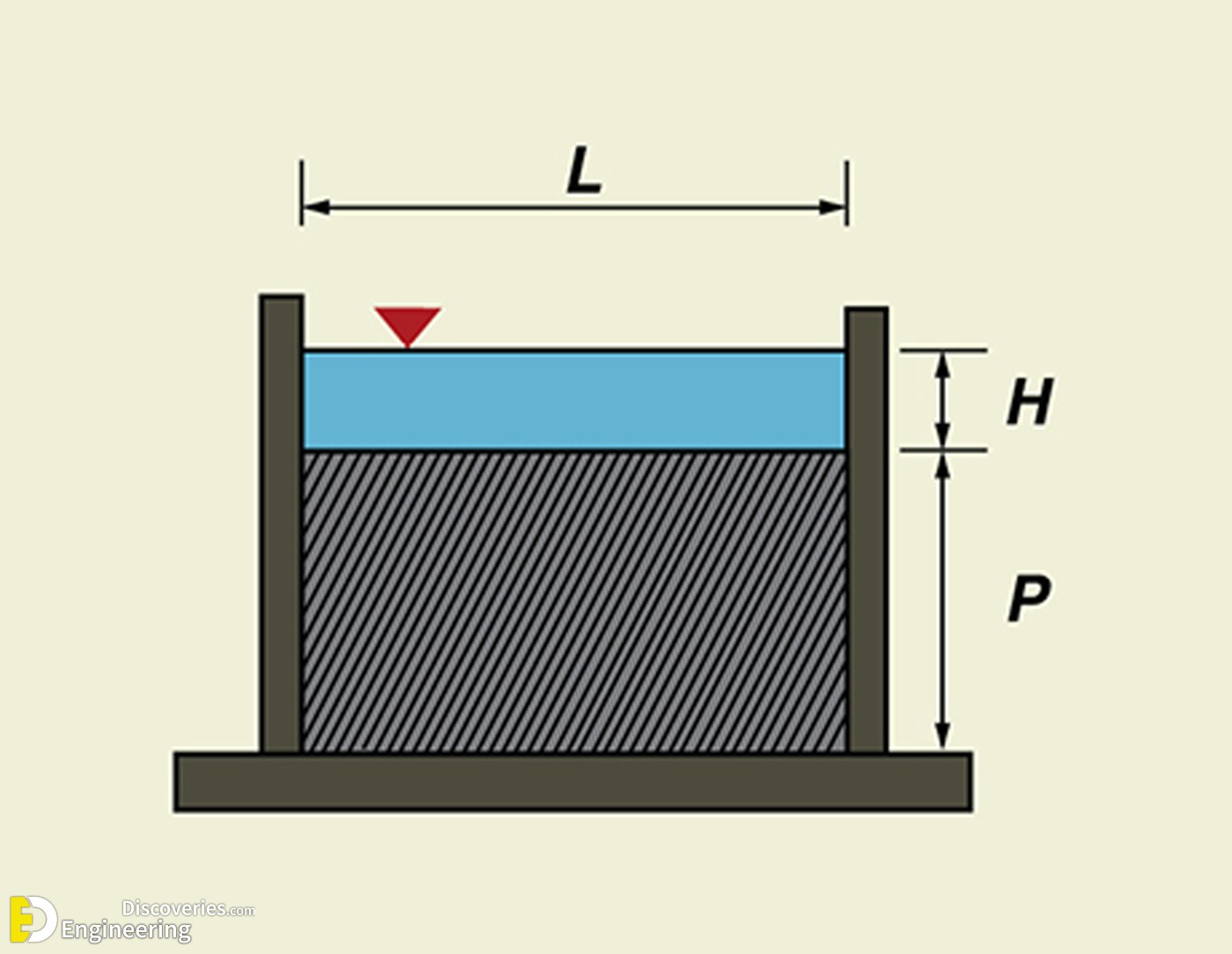
Equation: Considering Velocity of Approach

Equation: Neglecting Velocity of Approach
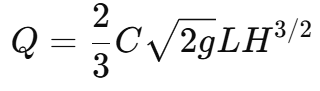
When the velocity of the approach is negligible, the second equation simplifies calculations.
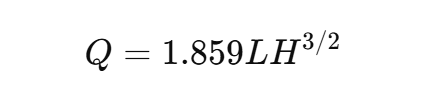
2. Cipolletti Weirs
Cipolletti weirs are trapezoidal with side slopes of 1 horizontal to 4 vertical. These weirs are self-compensating for end contractions, making them ideal for irrigation systems.
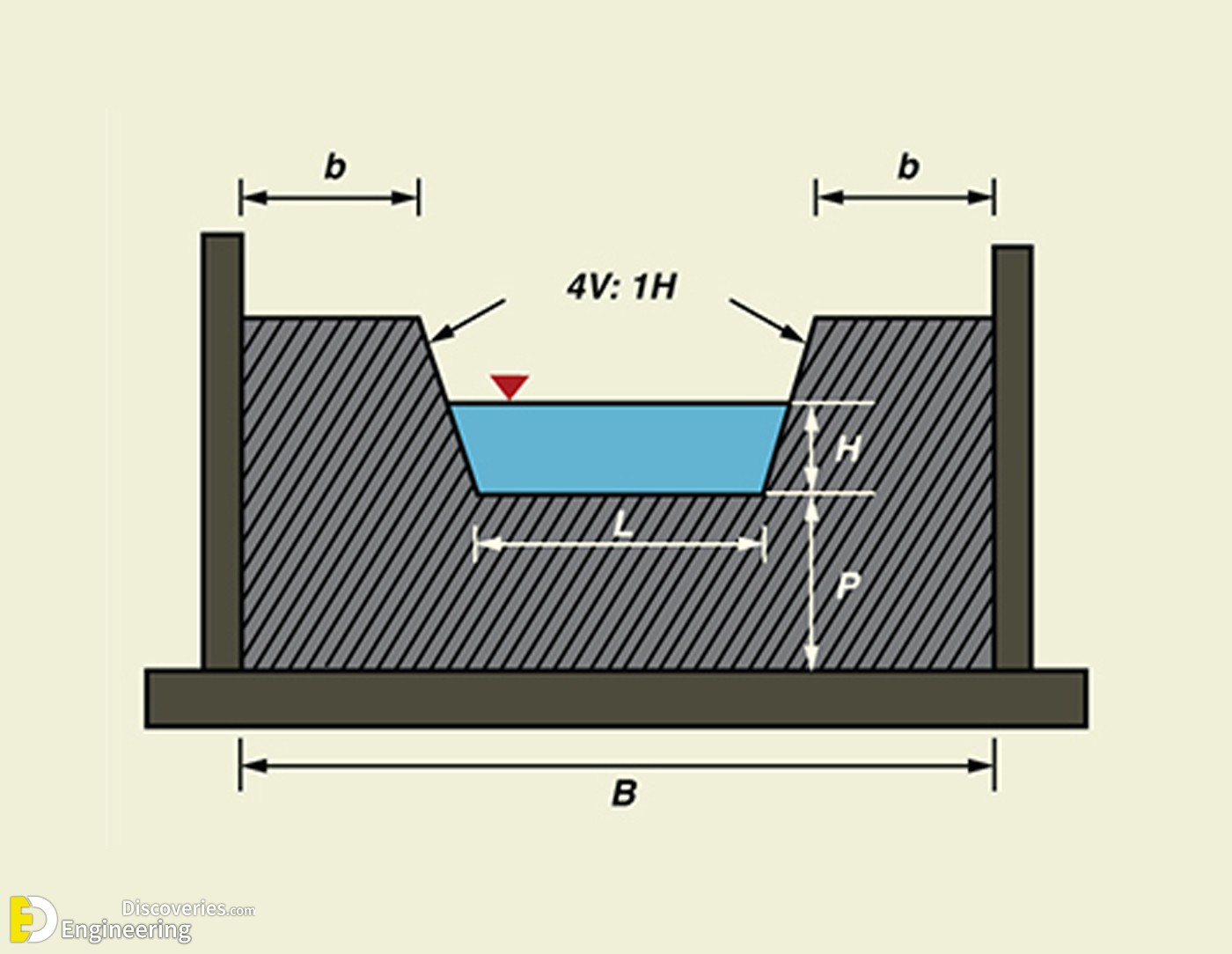
Equation
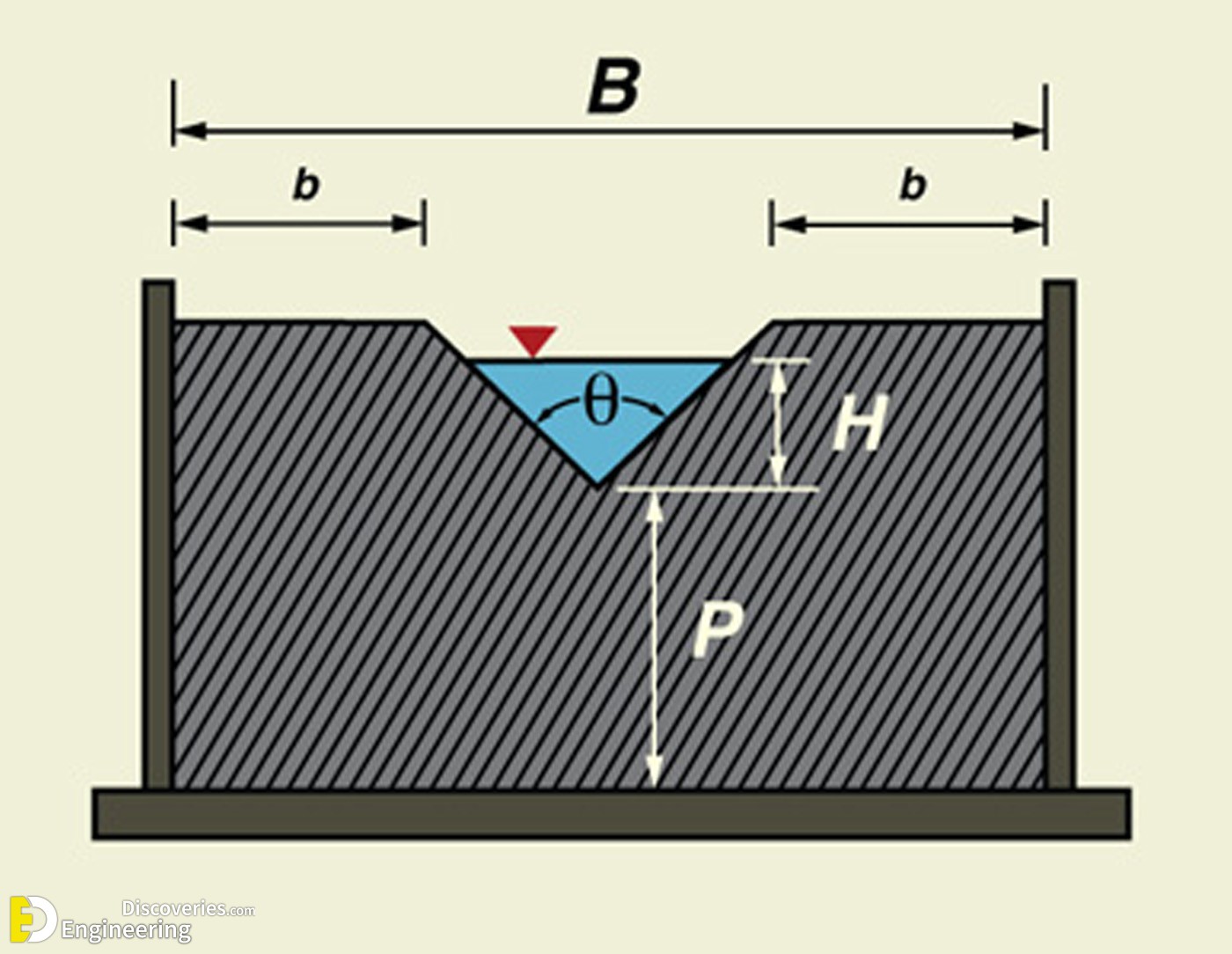
3. Triangular (V-Notch) Weirs
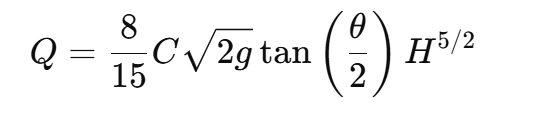
Triangular weirs have a V-shaped notch, making them highly sensitive to low flow rates. They are widely used for precise flow measurements in small streams or laboratory experiments.
Equation
For a triangular weir with a notch angle of 90°, the equation simplifies to:

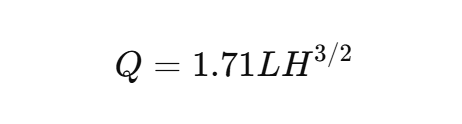
4. Weirs with Dams
In cases where weirs are coupled with dams, the approach velocity is often negligible. The discharge is given by:
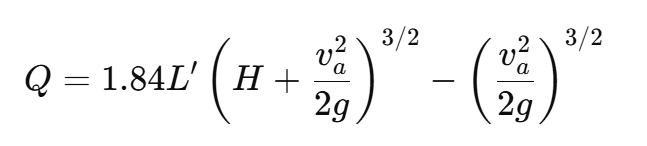
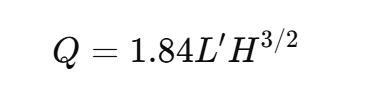
5. Francis Formula
When the coefficient of discharge or the weir factor mm is unavailable, the Francis formula can be used for rectangular weirs:
Equation: Considering Velocity of Approach
Equation: Neglecting Velocity of Approach
The effective length varies based on the type of weir:
Time Required for Discharge
The time required to discharge water between two heads H1 and H2 is given by:
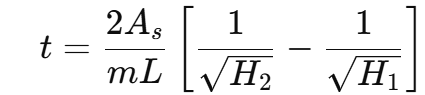
Where:
Applications of Weirs
Weirs are used in various fields of hydraulic engineering, including:
Advantages and Limitations of Weirs
Advantages
Limitations
Conclusion
Weirs are invaluable tools in hydraulic engineering, offering simplicity and precision in measuring and regulating water flow. Understanding the different types of weirs, their governing equations, and practical applications can significantly enhance the design and efficiency of water management systems.
Click Here To See Dam vs. Weir: Unveiling The Key Differences You Need To Know
Loading related articles...
Loading recent articles...
Loading featured articles...
