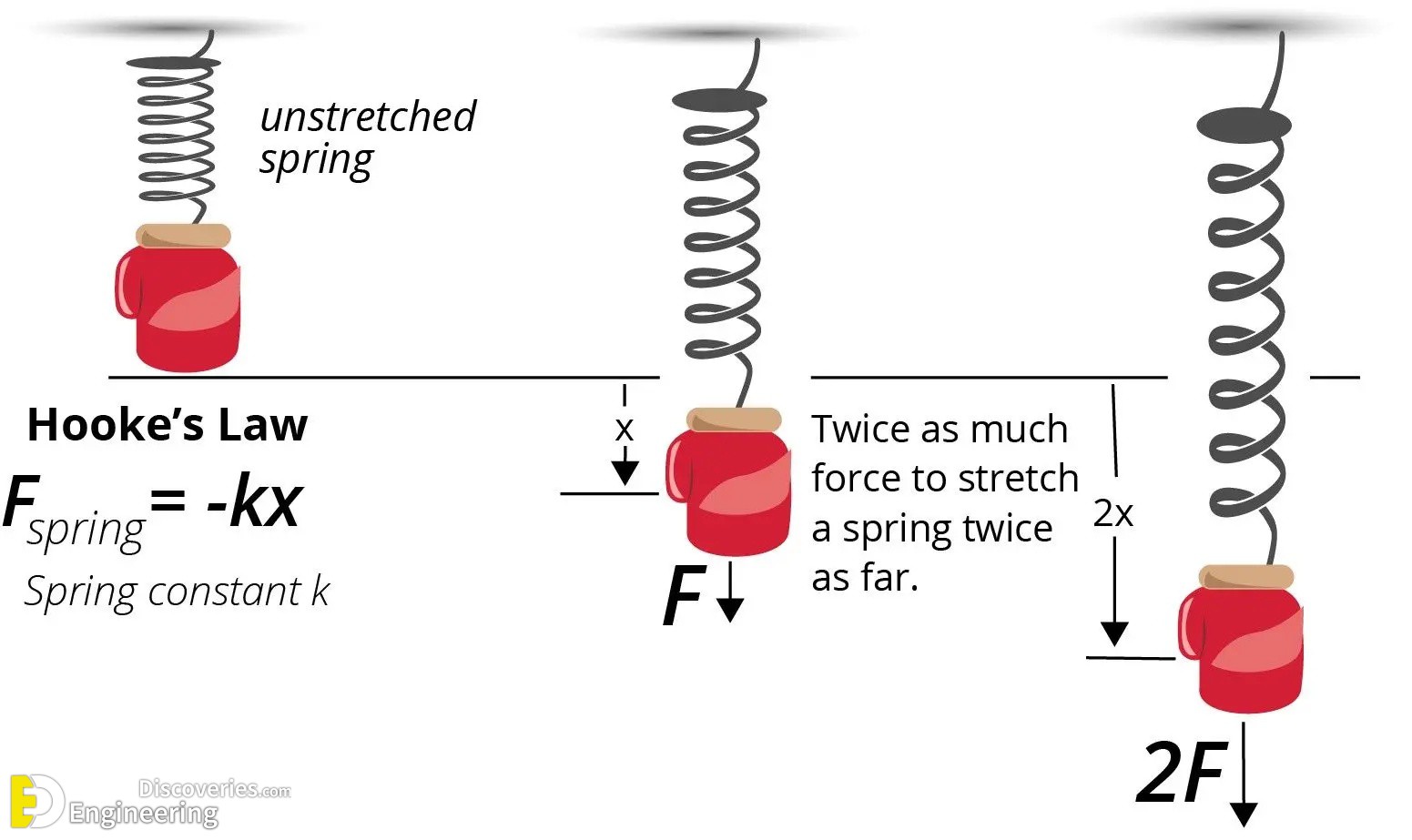
Ever bent a ruler to see how far it could go before it snapped? That playful moment is a perfect demonstration of stress and strain, two fundamental concepts in physics and engineering. These terms may sound intimidating, but they’re quite intuitive once you get the hang of them. Let’s break down the difference between stress and strain in a way that makes sense to everyone.
What is Stress?
In simple terms, stress is the internal resistance offered by a material when an external force is applied to it. Think of it as how much pressure the material feels due to the force.
Formula:
Stress (σ) = Force (F) / Area (A)
Units: Pascals (Pa) or N/m²
Everyday Examples of Stress
All these situations involve forces acting on materials, generating stress.
Types of Stress
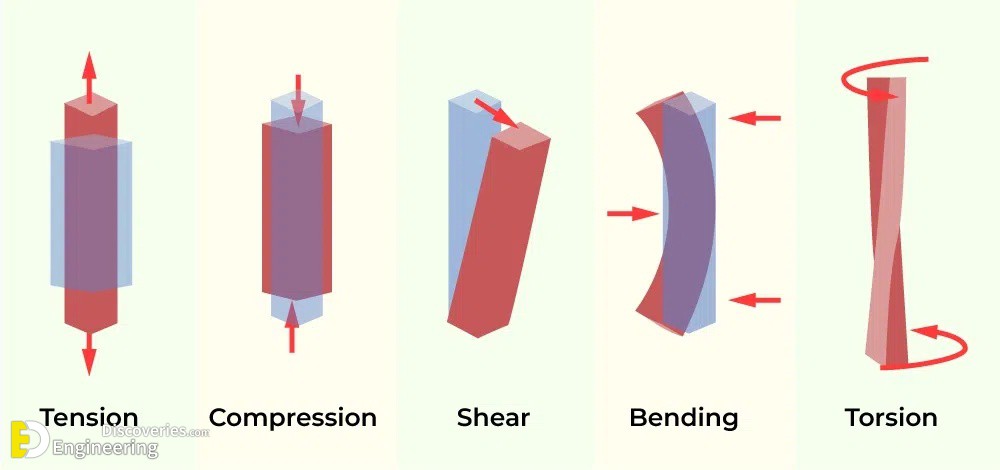
Internal Force and Area Relationship
Formula for Stress
As mentioned, stress = force divided by the area over which it is applied. So, smaller area = more stress for the same force. That’s why a needle can pierce skin so easily.
Importance of Cross-sectional Area
Imagine pressing your finger with a pen versus with the eraser end—the area makes all the difference.
What is Strain?
Strain is the measure of deformation—how much an object stretches or compresses under stress. It shows how a material responds after being pushed or pulled.
Formula:
Strain (ε) = Change in Length (ΔL) / Original Length (L₀)
Units: None (it’s a ratio)
How Strain Differs From Stress
Stress applies the pressure, and strain is how much the material bends, stretches, or compresses as a result.
Types of Strain
Practical Examples of Strain
Key Differences Between Stress and Strain
| Feature | Stress | Strain |
|---|---|---|
| Definition | Force per unit area | Deformation per unit length |
| Cause or Effect | Cause | Effect |
| Units | Pascals (Pa) | No units |
| Formula | σ = F/A | ε = ΔL/L₀ |
| Nature | External/Internal force | Response to that force |
Hooke’s Law and the Stress-Strain Relationship
Introduction to Hooke’s Law
Hooke’s Law beautifully links stress and strain:
Hooke’s Law:
Stress ∝ Strain (within the elastic limit)
or
σ = E × ε
Where E is the Young’s Modulus (a material-specific constant).
Stress-Strain Curve Explanation
This curve shows how a material behaves when stress is gradually increased.
Elastic Limit and Yield Point
Think of it as the difference between a rubber band snapping back and taffy stretching for good.
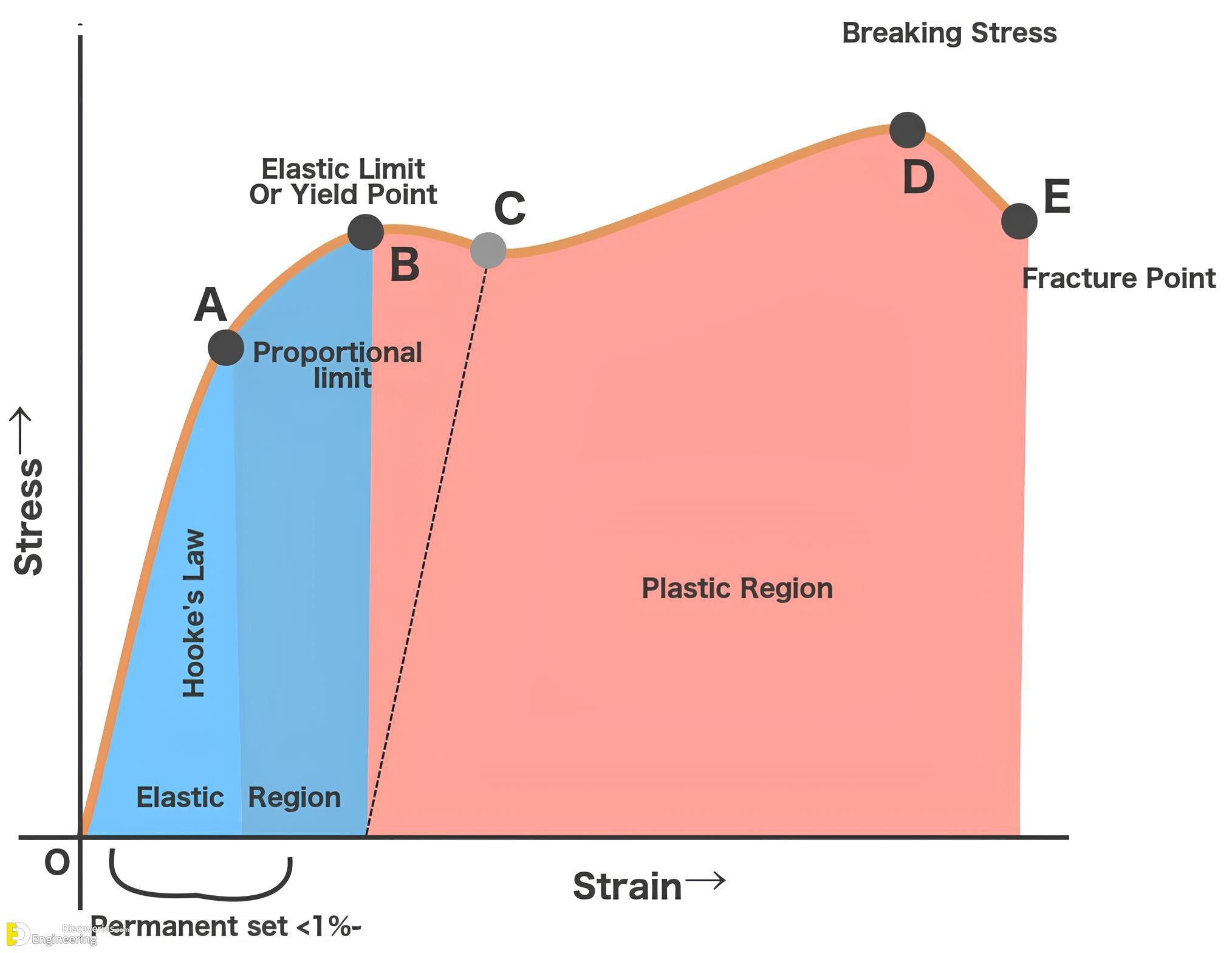
Stress-Strain Curve
The graph shows:
Real-World Interpretation
Applications in Engineering
Why It Matters
Every bridge, airplane, or skyscraper you see stands because engineers calculated stress and strain precisely.
Structural Integrity and Design
Stress and strain determine how much load a structure can bear before bending or breaking.
Bridges, Buildings, and Machines
From the Eiffel Tower to your bicycle, ignoring stress and strain can be catastrophic. Designs are tested using these principles to ensure safety and performance.
Factors Affecting Stress and Strain
Common Misconceptions
Summary of Differences
In short:
Understanding these basics helps you grasp more advanced concepts in mechanics and materials science.
Understanding Stresses In Beams – Full Details
Loading related articles...
Loading recent articles...
Loading featured articles...