
Bracing is an essential component of structural engineering, providing lateral support and ensuring stability. Whether it’s withstanding wind, seismic forces, or other external loads, effective bracing plays a critical role in maintaining a structure’s integrity.
What is Bracing in Structural Engineering?
Bracing is a technique used to enhance the stability of structures. It involves adding supportive elements to resist lateral forces such as wind, earthquakes, and vibrations. These forces, if unchecked, can compromise the safety and durability of buildings.
Braces come in various forms, each designed for specific applications. Common types include:
Why is Bracing Important?
Bracing is crucial for ensuring that buildings can endure external pressures. Without proper bracing, structures are prone to deformation, instability, and even collapse. By providing lateral support, braces:
For example, bracing is indispensable in high-rise buildings to maintain balance against strong winds. Similarly, bracing ensures that vibrations don’t weaken the structure over time in earthquake-prone regions.
Types of Bracing Systems
1. Cross-Bracing
Cross-bracing is one of the most effective methods for stabilizing structures. It consists of diagonal members that intersect, creating a rigid frame. This type is widely used in bridges, towers, and multi-story buildings.
2. Knee-Bracing
Knee-bracing provides additional strength at connection points, particularly between beams and columns. It’s ideal for buildings with architectural aesthetics as important as structural stability.
3. Diagonal Bracing
Diagonal bracing uses a single member to counteract horizontal forces. This method is simple but highly effective, commonly employed in industrial buildings and warehouses.
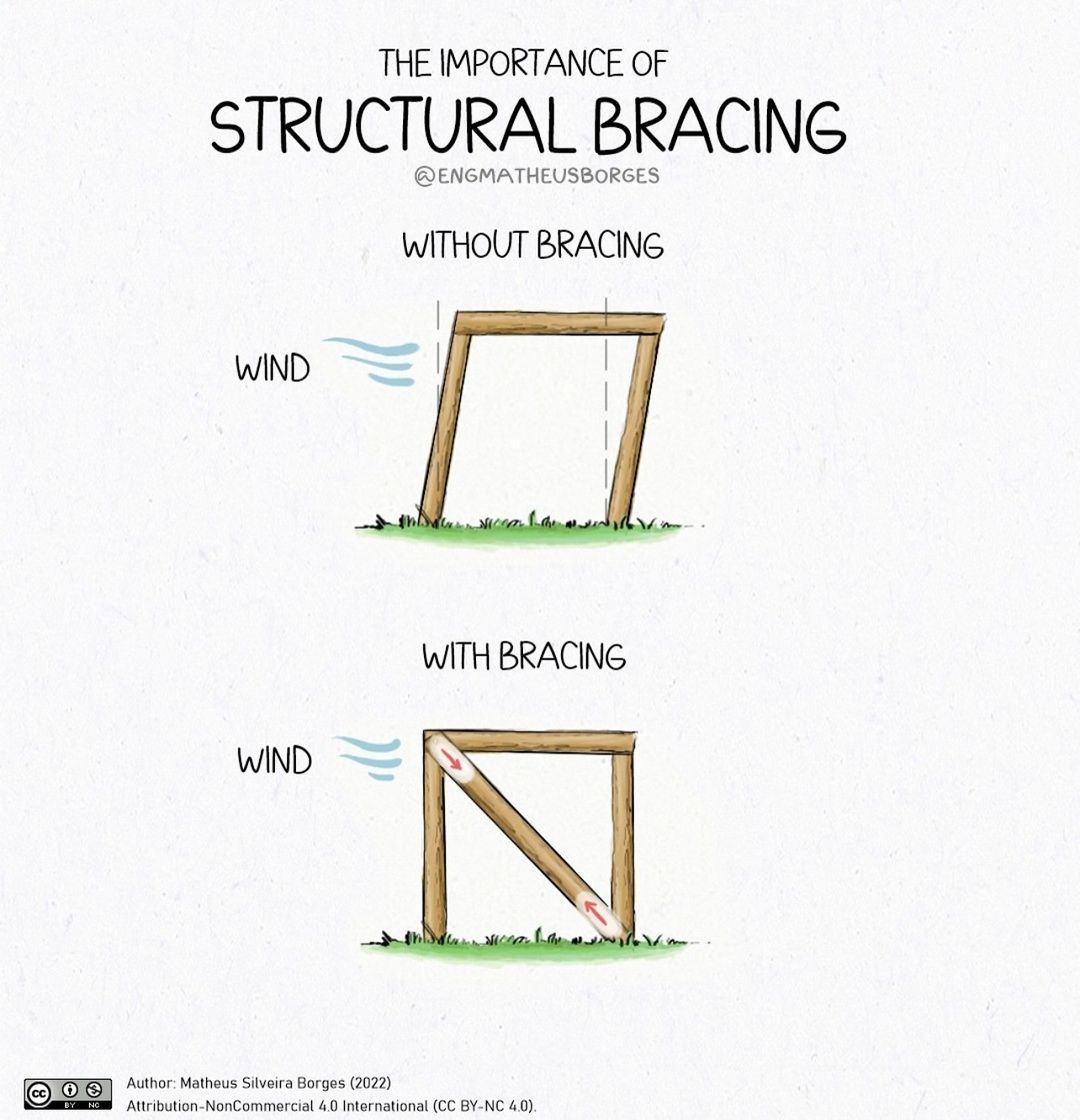
How Bracing Ensures Structural Integrity
Bracing systems distribute lateral loads across the structure, reducing stress on individual components. For instance, when wind pushes against a tall building, bracing helps channel the force through diagonal supports, preventing damage or collapse.
Moreover, bracing contributes to the overall rigidity of the structure, ensuring that it doesn’t bend or sway excessively. It acts as a safeguard, much like a dancer maintaining poise and balance under pressure.
The Role of Engineers in Bracing Design
Structural engineers carefully analyze the type and magnitude of forces acting on a building before designing a bracing system. Factors like building height, location, and usage are considered to determine the most suitable bracing solution.
For instance, buildings in seismic zones require dynamic bracing systems to absorb energy and minimize damage during earthquakes. On the other hand, high-rise buildings often use cross-bracing to counteract wind forces.
Benefits of Effective Bracing
Click Here To See Anatomy Of Reinforced Concrete Columns: Key Components And Their Roles
Photo Credit: Matheus Borges
Loading related articles...
Loading recent articles...
Loading featured articles...
